"Does ozone therapy actually work?" It's the first question most patients ask — and it's a good one. At Purety Family Medical Clinic, Dr. Jonathan Birch has performed over 2,500 ozone treatments, including EBO2 (also called EBOO or ozone dialysis). He's seen what it does well, where the evidence is strongest, and where patients need to be careful. This is his honest take.
First: What Is EBO2 Ozone Therapy?
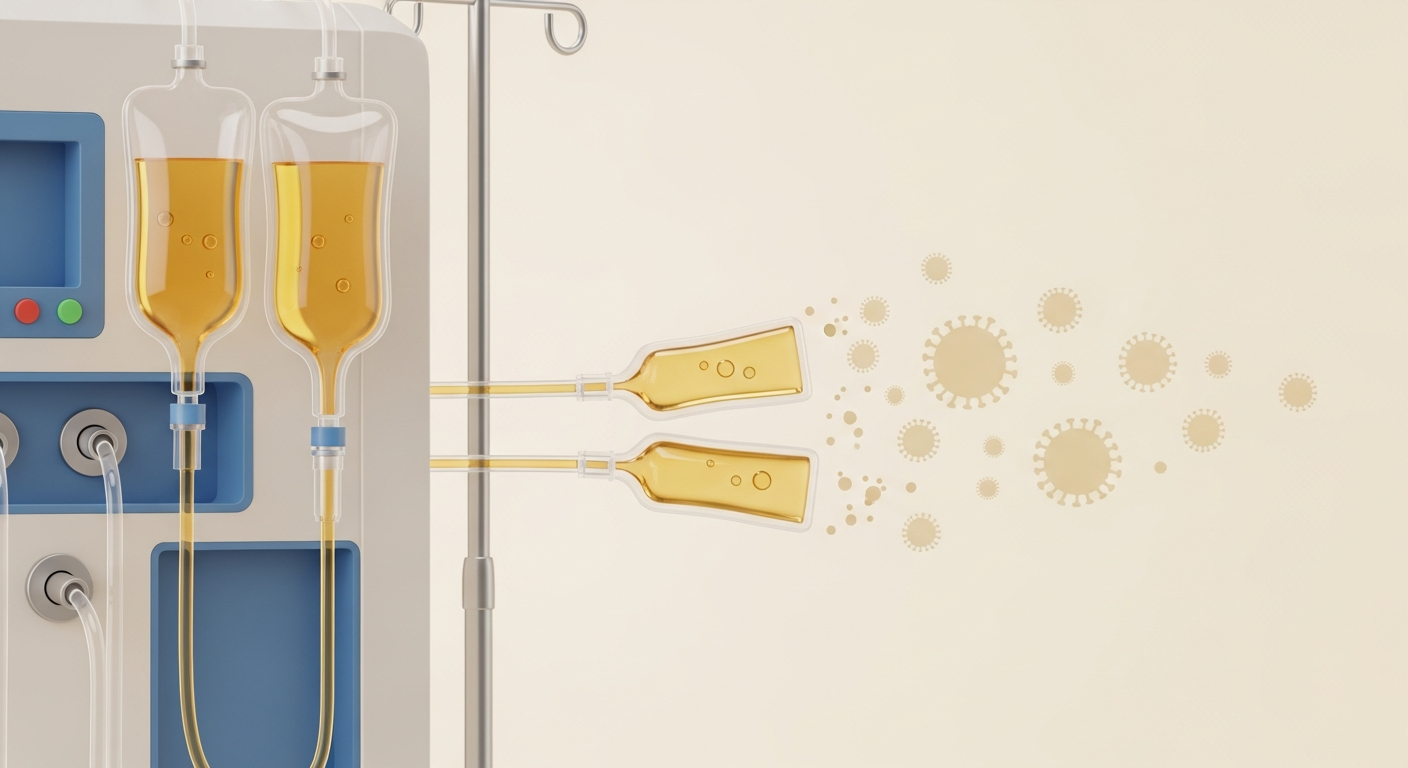
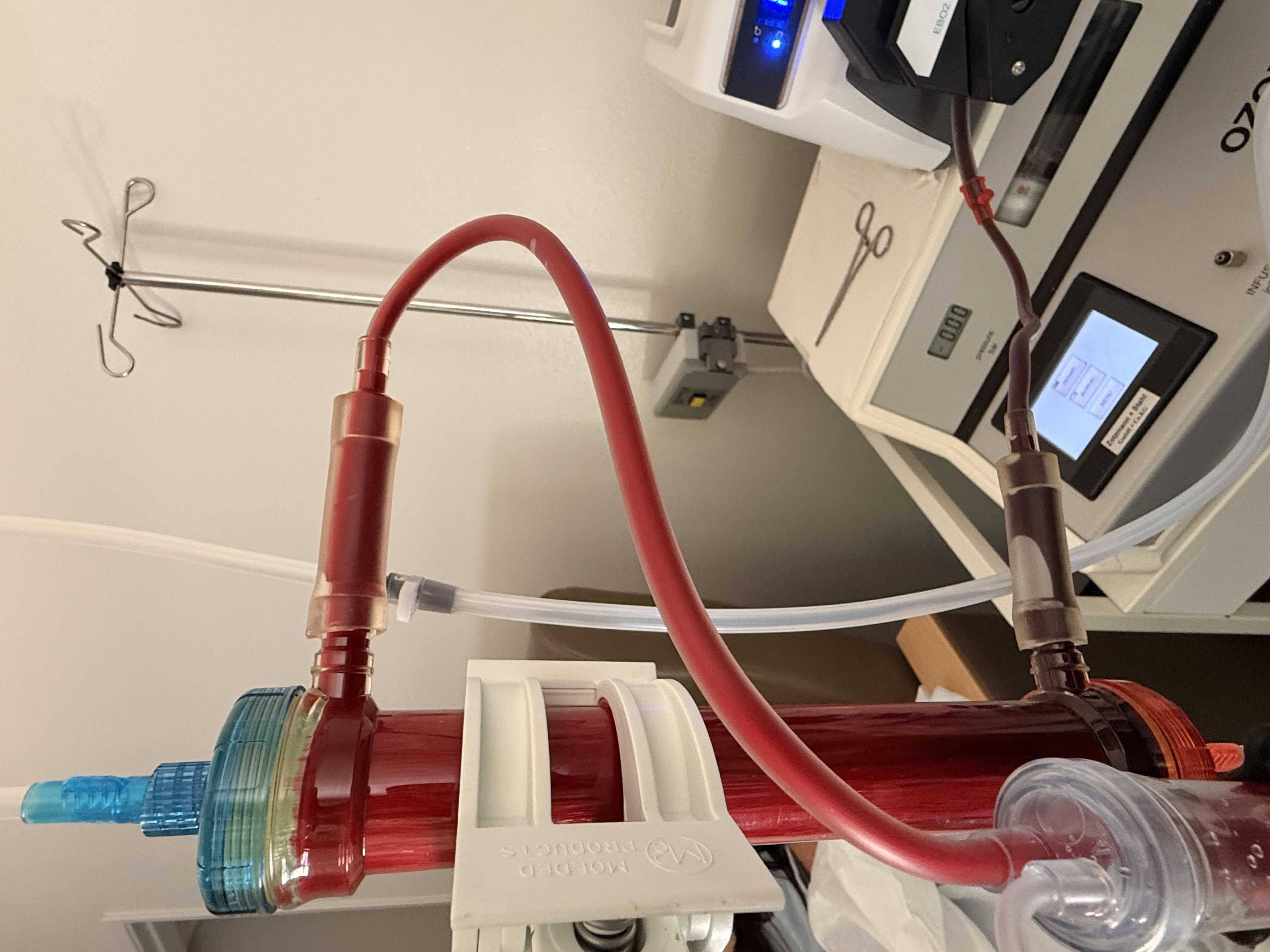
EBO2 (Extracorporeal Blood Ozonation) is the most advanced form of ozone therapy currently available. Blood is drawn from the body, circulated through an external circuit where it is exposed to high-concentration medical-grade ozone and ultraviolet light, and returned to the body. This is distinct from simpler ozone methods like rectal insufflation or minor autohemotherapy — it treats a much larger volume of blood and has a fundamentally different physiological impact.
When patients ask "does ozone therapy work?", they're often conflating very different modalities. A clinic that does rectal ozone or ozone sauna is doing something categorically different from a clinic performing true EBO2 with an extracorporeal circuit. The research base and expected clinical outcomes are not equivalent.
What the Evidence Actually Shows
Ozone therapy has a larger evidence base than most practitioners — and most skeptics — realize. There are over 3,000 published studies on medical ozone, including a significant number of randomized controlled trials and systematic reviews. The evidence is not uniform across all conditions, which is important to acknowledge.
Strongest evidence: Infections and antimicrobial effects
Ozone's antimicrobial properties are among the most thoroughly documented. In vitro and clinical studies have demonstrated activity against bacteria, viruses, fungi, and protozoa. A 2018 systematic review in Frontiers in Microbiology documented ozone's efficacy against drug-resistant organisms. For patients with chronic infections — including Lyme disease, chronic EBV reactivation, and C. difficile — this is one of the more compelling mechanisms.
Strong evidence: Wound healing and tissue oxygenation
Ozone is extensively studied and widely used in European hospitals for wound care — particularly diabetic foot ulcers and chronic non-healing wounds. The mechanism is well understood: ozone improves oxygen delivery and utilization at the cellular level, stimulates antioxidant enzyme production, and promotes angiogenesis. Several meta-analyses confirm these effects.
Growing evidence: Autoimmune and inflammatory conditions
For autoimmune and inflammatory conditions, the evidence is newer and still accumulating. Ozone therapy appears to modulate the immune response — dampening excess inflammatory activity rather than simply suppressing it. A 2019 review in Oxidative Medicine and Cellular Longevity documented ozone's effects on cytokine regulation and its potential role in autoimmune disease management.
Emerging evidence: Long COVID and post-viral conditions
The Long COVID literature is evolving rapidly. Several published case series and clinical observational studies have reported significant symptom improvement — including fatigue, cognitive symptoms, and post-exertional malaise — following ozone therapy protocols. Mechanistically, this makes sense: Long COVID involves persistent viral antigen, immune dysregulation, mitochondrial dysfunction, and microclotting — all areas where ozone therapy has documented biological effects. This is a plausible biological basis, not a theoretical one.
Dr. Birch has seen significant improvements in Long COVID patients. He's also clear that ozone therapy alone is rarely the complete answer — it's most effective as part of a comprehensive protocol that addresses nutrition, sleep, autonomic function, and other contributors.
Where Skepticism Is Warranted
Here's where I'll be direct: some ozone clinics make claims that go well beyond what the evidence supports. Ozone therapy is not a cancer cure. It is not appropriate as a substitute for antibiotics in acute life-threatening infections. Claims that ozone "detoxifies the blood" of heavy metals or filters toxins are not supported by the EBO2 mechanism — the extracorporeal circuit in EBO2 does not function like dialysis. It exposes blood to ozone and UV; it does not filter or remove substances.
Patients deserve accurate information. I'm more interested in patients making good decisions than in selling ozone to everyone who walks in. If your case isn't a strong match for EBO2, I'll tell you — and we'll talk about what is.
What to Watch Out For When Researching Providers
Not all ozone providers are equal. Some important red flags:
- Clinics calling insufflation "EBO2." Rectal, vaginal, or ear insufflation is a completely different modality — simple and low-risk, but not EBO2. If a clinic is charging EBO2 prices for insufflation, that's a problem.
- No physician oversight. EBO2 is an IV-based extracorporeal procedure. It should be performed under direct medical supervision with appropriate monitoring, not in a wellness spa setting without qualified medical oversight.
- Guaranteed outcomes. No responsible practitioner guarantees specific outcomes from ozone therapy. If a clinic promises that EBO2 will "cure" your Lyme disease or reverse your autoimmune condition, walk away.
- No intake process. EBO2 is contraindicated in some situations — including G6PD deficiency, certain coagulation disorders, and active thyroid disease. A qualified provider will screen for contraindications before treatment.
Who Is EBO2 Best For?
In our practice, patients who respond best to EBO2 tend to share a few characteristics: they have chronic conditions with an infectious, inflammatory, or immune component that hasn't responded adequately to conventional care. Common presentations include chronic Lyme disease, Long COVID, mold illness and CIRS, autoimmune flares, and complex multi-system illness.
EBO2 is not a first-line treatment for uncomplicated conditions. It's a powerful tool for complex cases where the biological burden — infectious, inflammatory, or toxic — is high enough that a comprehensive, intensive intervention makes sense.
If you're trying to decide whether EBO2 is appropriate for your situation, the right starting point is a thorough consultation. We review your history, labs, and prior treatments before recommending any protocol. To learn more about EBO2 ozone therapy at Purety Clinic, call (805) 500-8300.