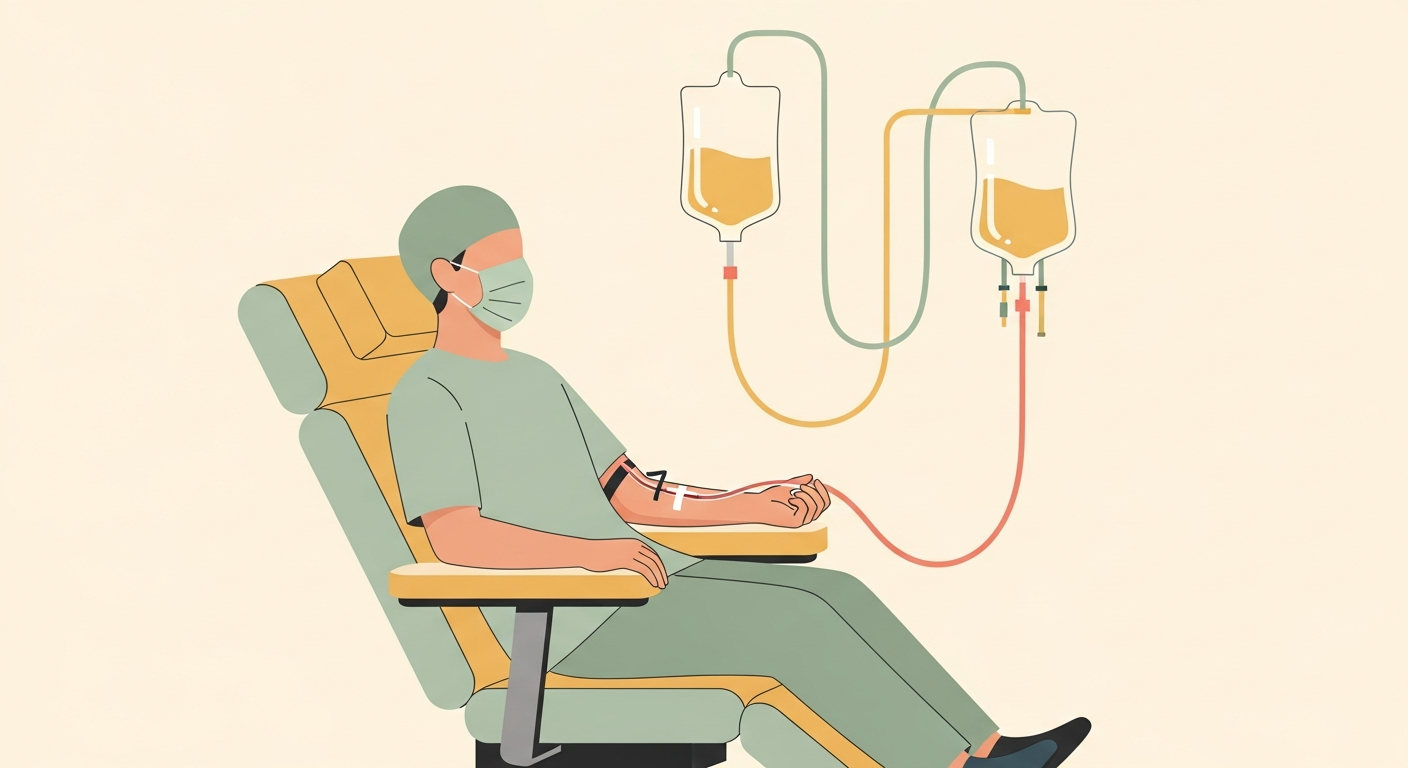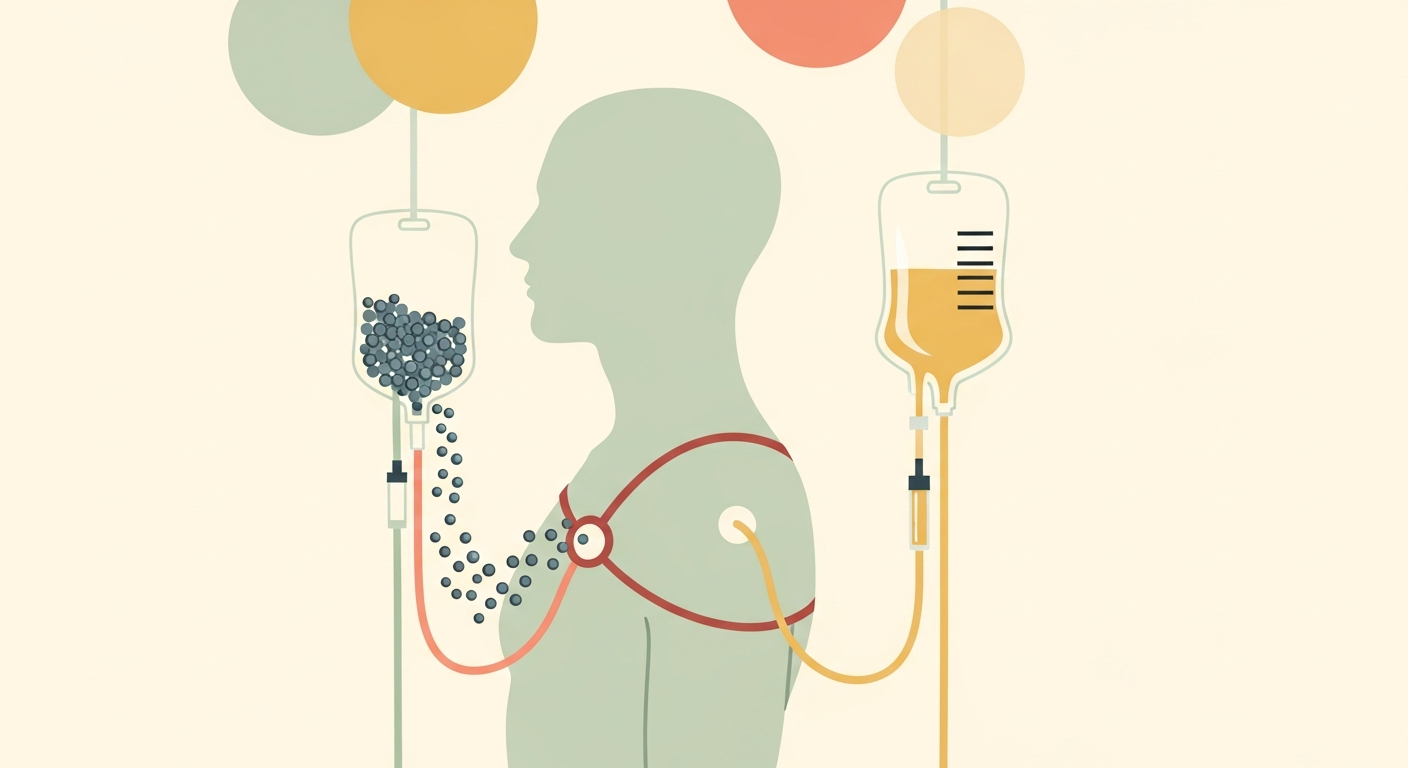
Long COVID is one of the most challenging medical problems of our era — and one for which conventional medicine has few effective tools. An emerging body of research suggests that therapeutic plasma exchange (TPE), a procedure that physically removes autoantibodies and inflammatory proteins from the bloodstream, can produce meaningful improvement in Long COVID patients who have not responded to other treatments. At Purety Clinic in Santa Barbara, we have been treating Long COVID patients with TPE since 2022. Here's what the evidence shows.
Why Do Some Long COVID Patients Have Autoantibodies?
Long COVID — defined as symptoms persisting more than 12 weeks after acute SARS-CoV-2 infection — affects an estimated 10–30% of people who contract COVID-19. The most debilitating symptoms (profound fatigue, post-exertional malaise, brain fog, orthostatic intolerance, and POTS) do not appear to be caused by persistent virus. Instead, multiple research groups have identified pathological immune activity as the driving mechanism.
Specifically:
- Autoantibodies targeting G-protein-coupled receptors — particularly beta-1 and beta-2 adrenergic receptors and M2/M4 muscarinic acetylcholine receptors — have been detected in the blood of Long COVID patients. These receptors regulate heart rate, vascular tone, and autonomic nervous system function. Antibodies against them produce exactly the symptoms seen in Long COVID: dysautonomia, POTS, fatigue, and cognitive impairment.
- Fibrinogen amyloid microclots — insoluble clotting structures that resist normal degradation — have been identified in Long COVID patient blood by Dr. Resia Pretorius and colleagues at Stellenbosch University. These microclots impair microcirculation, reducing oxygen delivery to tissues and explaining the post-exertional malaise and cognitive symptoms.
- Elevated inflammatory cytokines — persistent elevation of interleukin-6, tumor necrosis factor-alpha, and other pro-inflammatory signaling molecules has been documented in Long COVID, contributing to systemic inflammation and fatigue.
All three of these pathological mediators — autoantibodies, microclots, and inflammatory cytokines — are large-molecule plasma proteins. All three are removed by therapeutic plasma exchange.
The Charité Berlin Study: A Landmark Finding
In 2022, a research group at Charité Berlin — one of Europe's leading academic medical centers — published results in The Lancet describing the use of therapeutic plasma exchange in Long COVID patients with severe, refractory symptoms. The results were striking.
Patients received a series of TPE sessions (typically 5, spaced over several weeks). Autoantibody levels dropped significantly after TPE. More importantly, clinical symptoms — particularly fatigue, brain fog, and autonomic dysfunction — improved meaningfully in the majority of treated patients. Some patients who had been bedbound or cognitively impaired for months reported returning to near-normal function.
The mechanism was clear: removing the autoantibodies and inflammatory proteins from circulation relieved the pathological immune load, allowing the autonomic nervous system and cellular energy pathways to recover.
Other Supporting Research
The Charité findings have been supported by additional case series and mechanistic studies:
- A German research group (Tölle et al.) published a series demonstrating reduction in adrenergic receptor autoantibodies and improvement in heart rate variability and POTS symptoms following TPE in Long COVID patients.
- Research by Pretorius and colleagues has shown that plasma from Long COVID patients, when added to healthy red blood cells, causes those cells to clump and lose their normal disc shape — a property that is removed by TPE, suggesting that clearing the plasma is mechanistically beneficial beyond just antibody removal.
- Multiple case reports from European and American clinicians describe significant improvement in refractory Long COVID following TPE, particularly in patients with confirmed autonomic dysfunction, elevated inflammatory markers, or documented autoantibodies.
Who With Long COVID May Benefit Most from TPE?
Based on the available evidence and our clinical experience at Purety Clinic, TPE for Long COVID is most likely to be beneficial in patients who have:
- Confirmed autonomic dysfunction or POTS (heart rate increase of 30+ bpm on standing, orthostatic intolerance)
- Documented autoantibodies on appropriate testing (adrenergic, muscarinic receptor antibodies)
- Elevated inflammatory markers (ferritin, CRP, cytokine panels)
- Cognitive impairment (brain fog, memory issues) as a significant symptom
- Post-exertional malaise — worsening of symptoms after minimal physical or cognitive activity
- Failed to respond adequately to other treatments (pacing, beta-blockers for POTS, antihistamines, low-dose naltrexone)
TPE is not the right starting point for every Long COVID patient. For those with milder presentations, other interventions may be tried first. But for patients with severe, refractory Long COVID that is significantly impairing function, it represents one of the most mechanistically targeted interventions available.
What the Treatment Protocol Looks Like
At Purety Clinic, Long COVID patients who are candidates for TPE typically receive:
- Baseline labs: Complete blood count, metabolic panel, inflammatory markers, and where indicated, autoantibody testing and coagulation studies
- TPE sessions: Typically 5 sessions, spaced monthly (or more frequently in severe cases), each lasting 1.5–2.5 hours
- Concurrent support: IV NAD+, IV Vitamin C, and ozone therapy are often combined with TPE as part of a comprehensive Long COVID recovery protocol — each addressing different aspects of the pathology
- Follow-up: Repeat labs after the third session to assess autoantibody changes and inflammatory marker trends; clinical assessment at each visit
Is TPE the Right Choice for You?
The decision to pursue TPE requires a careful evaluation of your specific presentation, symptom profile, and prior treatment history. It is not appropriate for everyone with Long COVID — but for the right patient, it can be transformative.
If you're in Santa Barbara, Ventura, Los Angeles, or anywhere in California and are dealing with refractory Long COVID, we'd be glad to evaluate whether therapeutic plasma exchange might be appropriate for your situation. We also offer remote consultations for patients who cannot travel to our Santa Barbara clinic.