Heavy metal detox Santa Barbara patients seek often begins with a simple question: why do I still feel sick despite normal labs and multiple treatments? For many residents of California's Central Coast, the answer lies in accumulated metals from environmental sources—old water pipes, occupational exposure, contaminated fish, dental amalgams—that conventional medicine rarely tests for and struggles to remove. At Purety Family Medical Clinic in Santa Barbara, we approach heavy metal detoxification differently, combining proven naturopathic chelation protocols with therapeutic plasma exchange (TPE) to address both free and protein-bound metal reservoirs that standard chelation alone cannot reach.
Where Heavy Metals Hide in Santa Barbara
The Santa Barbara region, despite its reputation for health and natural beauty, presents several pathways for heavy metal accumulation. Understanding your exposure history is the first step toward effective detoxification.
Common Sources of Heavy Metal Exposure
- Aging infrastructure: Many Santa Barbara homes built before 1986 contain lead solder in copper plumbing; homes built before the 1950s may have lead service lines connecting to municipal water supplies
- Marine diet: Pacific fish consumption, particularly larger predatory species like tuna, swordfish, and halibut, concentrates methylmercury through bioaccumulation
- Dental amalgams: Silver fillings contain approximately 50% elemental mercury, which releases vapor during chewing and slowly accumulates in tissues over decades
- Occupational exposure: Agricultural workers may encounter arsenic in older pesticide residues; construction and renovation workers face lead dust; artists and craftspeople use cadmium-containing pigments
- Consumer products: Imported cosmetics, traditional remedies, certain supplements, and rice-based products may contain lead, mercury, or arsenic above safe thresholds
The body burden from these sources accumulates slowly. Unlike acute poisoning—which presents with dramatic symptoms requiring emergency care—chronic low-level exposure produces subtle, progressive dysfunction that conventional medicine often misattributes to other causes.
Symptoms That Suggest Heavy Metal Body Burden
Heavy metal toxicity rarely announces itself clearly. Patients who ultimately test positive for elevated body burden typically describe a constellation of non-specific symptoms that have persisted despite treatment for other conditions:
- Persistent fatigue unresponsive to sleep, thyroid optimization, or adrenal support
- Cognitive difficulties: brain fog, word-finding problems, memory lapses, difficulty concentrating
- Mood changes: anxiety, depression, irritability without clear precipitating factors
- Neurological symptoms: tremor, numbness, tingling, balance problems
- Gastrointestinal complaints: chronic constipation, unexplained nausea, loss of appetite
- Unexplained hypertension or cardiovascular concerns
- Joint pain or muscle aches that migrate without inflammatory markers
- Recurrent infections or immune dysregulation
The challenge: these symptoms overlap with dozens of other conditions. This is why proper testing, rather than empiric treatment, guides our approach at Purety.
How We Test for Heavy Metals: Beyond Standard Blood Work
Standard serum heavy metal panels measure only what is circulating in blood at the moment of the draw—often a tiny fraction of total body burden. We use more sophisticated testing strategies:
Unprovoked Baseline Testing
A 24-hour urine collection or random urine spot test establishes baseline excretion. This identifies ongoing high-level exposure but typically underestimates stored burden in tissues.
Provoked Challenge Testing
After administering a chelating agent (commonly DMSA, DMPS, or EDTA), we collect urine over 6–24 hours. The chelator temporarily binds to stored metals and increases urinary excretion, revealing body burden that baseline testing misses. This approach, while not universally accepted in conventional medicine, has been used in functional and naturopathic practice for decades and correlates with clinical response to treatment.
Hair and Stool Analysis
Hair mineral analysis provides a historical record of exposure, though interpretation requires expertise—low hair levels sometimes paradoxically indicate poor excretion capacity rather than low burden. Stool testing can reveal biliary excretion patterns, particularly for mercury.
At Purety Family Medical Clinic, we interpret these tests in context—clinical history, symptom pattern, exposure inventory, and individual biochemistry—rather than treating lab values in isolation.
The Limitation of Chelation Alone: Why Some Metals Resist Standard Treatment
Intravenous chelation therapy—using agents like calcium disodium EDTA, DMPS (dimercaptopropanesulfonic acid), or DMSA (dimercaptosuccinic acid)—has been the standard approach to heavy metal removal for decades. These molecules bind free metals in circulation and interstitial spaces, facilitating renal excretion.
Chelation works well for acute exposures and for metals that remain loosely bound in accessible compartments. However, research increasingly recognizes a significant limitation: protein-bound metals.
Heavy metals like mercury, lead, cadmium, and arsenic bind tightly to serum proteins—particularly albumin and immunoglobulins. Once bound, they become largely inaccessible to traditional chelating agents, which are too small and hydrophilic to penetrate the protein matrix effectively. These protein-bound reservoirs can persist for years, slowly releasing metals back into tissues and perpetuating toxicity long after exposure has ceased.
This is where therapeutic plasma exchange offers a fundamentally different mechanism.
Therapeutic Plasma Exchange for Heavy Metal Detox in Santa Barbara
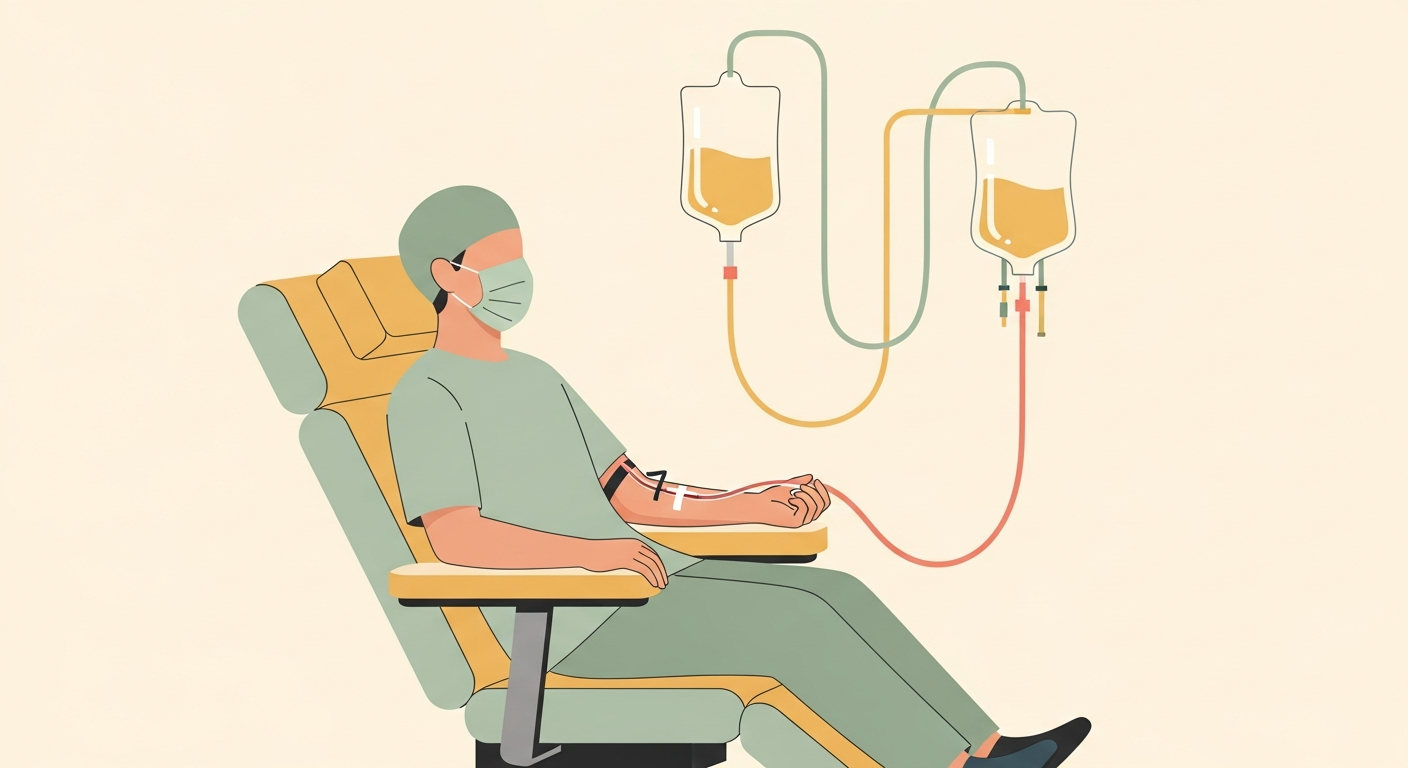
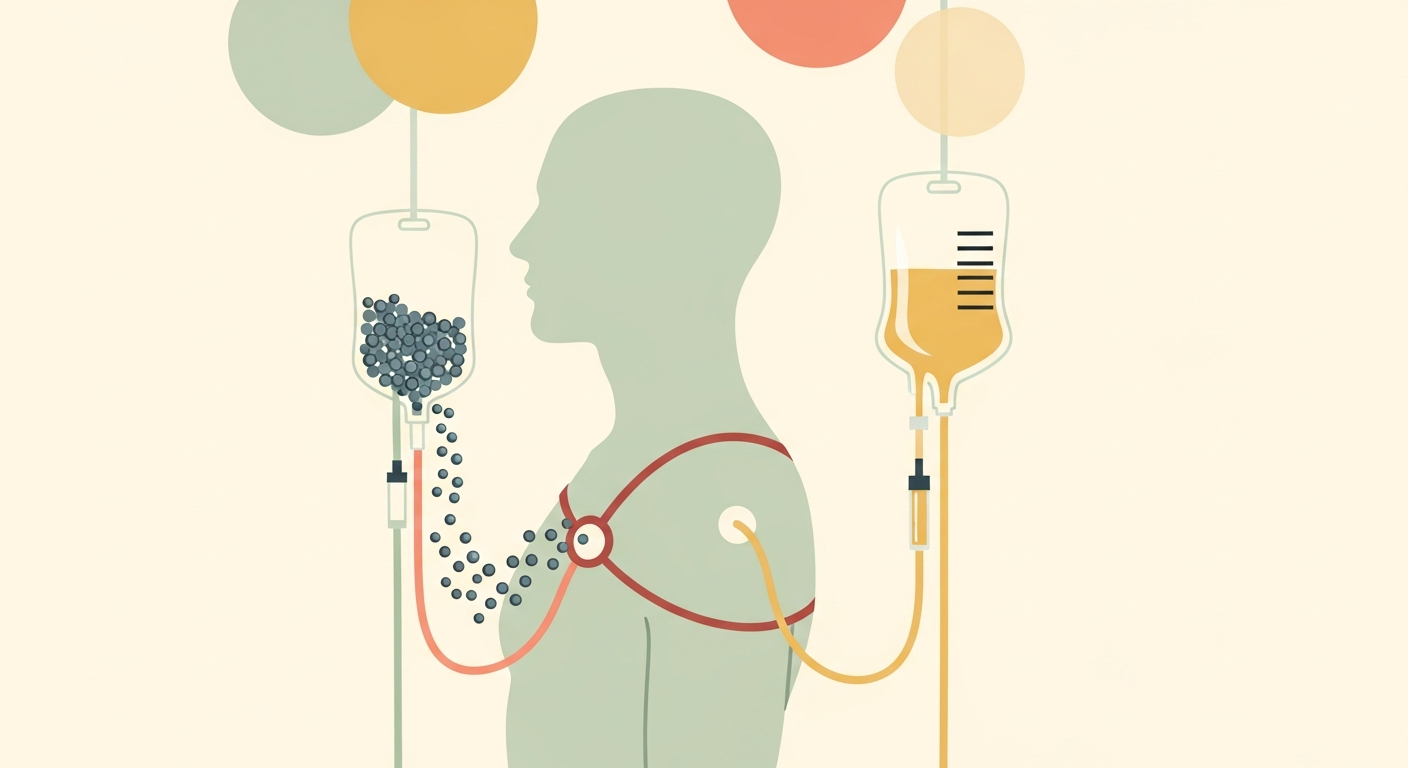
Therapeutic plasma exchange (TPE), also called plasmapheresis, physically removes plasma—the liquid portion of blood containing proteins, antibodies, and protein-bound toxins—and replaces it with donor plasma (typically 5% albumin solution). Unlike chelation, which relies on chemical binding, TPE mechanically extracts the proteins themselves, along with whatever is bound to them.
Evidence for TPE in Heavy Metal Removal
While TPE has been used for decades in conditions like autoimmune disease and hyperviscosity syndromes, its application to environmental toxin removal is newer. A 2025 study published in Medical Hypotheses examined TPE for removal of synthetic chemicals and heavy metals in patients with high body burden refractory to conventional detoxification. The research demonstrated measurable reduction in protein-bound BPA, phthalates, parabens, and heavy metals following serial TPE treatments—levels that had remained elevated despite months of oral and IV chelation.
The mechanism is straightforward: if metals are bound to serum proteins, removing those proteins removes the metals. For patients with chronically elevated levels despite aggressive chelation, TPE addresses the reservoir that chelation cannot access.
When We Consider TPE for Heavy Metal Detoxification
TPE is not a first-line treatment for everyone with elevated heavy metals. We consider it for patients who meet specific criteria:
- Documented high body burden on provoked testing
- Persistent elevation despite 6–12 months of IV chelation and nutritional support
- Ongoing symptoms consistent with metal toxicity (neurological, cognitive, systemic)
- Evidence of protein-bound metal fraction on specialized testing
- Absence of contraindications to plasma exchange (severe cardiovascular disease, coagulopathy, inability to tolerate fluid shifts)
TPE is a specialized procedure requiring vascular access, careful monitoring, and clinical expertise. At Purety, we perform TPE in our Santa Barbara clinic under the supervision of Dr. Jonathan Birch, NMD, RMSK, using contemporary apheresis equipment in a medically supervised outpatient setting.
Our Integrated Heavy Metal Detox Protocol in Santa Barbara
Effective heavy metal detoxification is not a single intervention—it is a phased, individualized process that addresses exposure, mobilization, excretion, and biochemical support simultaneously.
Phase 1: Assessment and Exposure Reduction
We begin with comprehensive intake: exposure history, symptom timeline, dietary assessment, occupational and environmental inventory. We test (provoked and unprovoked urine, sometimes hair or stool) to establish baseline burden. Simultaneously, we identify and eliminate ongoing exposure sources—water filtration, dental amalgam removal planning, dietary modification, occupational protection.
Phase 2: Nutritional Foundation and Binder Support
Before mobilizing metals aggressively, we optimize detoxification biochemistry:
- Methylation support (methyl-B12, methylfolate, betaine) to support glutathione production
- Antioxidant cofactors (selenium, zinc, vitamin C, vitamin E, alpha-lipoic acid)
- Gut health optimization (metals are excreted through bile; constipation causes reabsorption)
- Binders (chlorella, modified citrus pectin, activated charcoal, bentonite clay) to prevent intestinal reabsorption
This phase typically lasts 4–8 weeks. Mobilizing metals without adequate support risks redistribution and worsened symptoms.
Phase 3: IV Chelation Therapy
Once foundation is established, we initiate IV chelation—typically calcium disodium EDTA or DMPS, administered weekly or biweekly depending on burden and tolerance. We monitor urine excretion, retest periodically, and adjust dosing based on response. Most patients require 10–30 chelation sessions over 6–12 months.
For many, this is sufficient. Levels decline, symptoms improve, and maintenance protocols (oral chelators, periodic IV boosters, continued binder use) sustain results.
Phase 4: Therapeutic Plasma Exchange for Refractory Cases
For the subset who plateau—levels that drop initially but then stall, or symptoms that improve only partially—we reassess for protein-bound burden and consider TPE. A typical TPE series for heavy metal detoxification consists of 3–6 treatments performed over 2–4 weeks, each exchanging 1.0–1.5 plasma volumes.
Post-TPE, we continue supportive nutrition and often resume lighter chelation to address any redistribution. Follow-up testing at 3 and 6 months tracks long-term clearance.
What to Expect During TPE at Purety Clinic
Patients often ask what the procedure feels like. TPE is performed as an outpatient procedure in our Santa Barbara clinic:
- Vascular access: We place a peripheral IV (typically both arms) or, for serial treatments, a temporary dialysis-style catheter in the neck or groin (placed under ultrasound guidance by Dr. Birch)
- The exchange: Blood is withdrawn continuously, separated by centrifugation into plasma and cellular components, plasma is discarded, and cells are returned in replacement fluid (albumin). The process takes 2–3 hours.
- Monitoring: Vital signs, electrolytes, and calcium levels are checked before, during, and after. Most patients tolerate the procedure well; mild lightheadedness or tingling (from citrate anticoagulant binding calcium) can occur and is managed with oral calcium supplementation.
- Recovery: Patients typically rest for 30–60 minutes post-procedure and can return to normal activity the same day, though we recommend avoiding strenuous exercise for 24 hours.
Side effects are uncommon and generally mild—temporary fatigue, mild nausea, or bruising at access sites. Serious complications (infection, clotting, allergic reaction to replacement fluid) are rare with proper technique and screening.
Why Santa Barbara Patients Choose Purety for Heavy Metal Detoxification
Purety Family Medical Clinic is one of the few practices in California—and the only clinic in Santa Barbara—offering therapeutic plasma exchange for environmental toxin and heavy metal removal in an outpatient naturopathic setting. Our approach integrates:
- Advanced diagnostics: We use the testing modalities that reveal true body burden, not just snapshot blood levels
- Evidence-informed protocols: Our treatments are grounded in published research (including the 2025 TPE study) and decades of naturopathic clinical experience
- Physician expertise: Dr. Birch is both a licensed naturopathic physician and a registered musculoskeletal sonographer (RMSK), bringing ultrasound-guided procedural skills and integrative medical training to complex cases
- Individualized care: No two patients have the same exposure history, genetic detoxification capacity, or symptom profile—our protocols adapt to you
- Comprehensive support: We address gut health, nutrition, hormones, immune function, and lifestyle factors that influence detoxification success
Many of our patients travel from elsewhere in California because they have exhausted local options. Others are Santa Barbara residents seeking a naturopathic alternative to conventional medicine's symptom-management approach.
Begin Your Heavy Metal Detox Journey in Santa Barbara
If you suspect heavy metal toxicity—whether from known exposure, unexplained chronic symptoms, or plateau on previous detoxification attempts—Purety Family Medical Clinic offers the comprehensive testing and treatment integration you need.
We are located at 2323 Oak Park Lane, Suite 102, Santa Barbara, CA 93105. To schedule a consultation with Dr. Jonathan Birch and discuss whether our heavy metal detoxification protocols, including therapeutic plasma exchange, are appropriate for your case, call (805) 500-8300 or visit our website at puretyclinic.com.
Heavy metal detox Santa Barbara patients can trust starts with proper assessment, evidence-based treatment, and a physician who understands both the science of toxicology and the art of naturopathic healing. Let us help you reclaim your health from the toxic burden that conventional medicine too often overlooks.