Therapeutic plasma exchange (TPE) has been used safely in clinical medicine for decades, yet many patients considering treatment naturally have questions about therapeutic plasma exchange side effects and what the experience will be like. Understanding the safety profile, common transient reactions, and rare risks can help you prepare mentally and physically for this powerful intervention.
At Purety Family Medical Clinic in Santa Barbara, we've performed hundreds of TPE sessions for patients with autoimmune conditions, neurological disorders, and those seeking removal of synthetic chemicals and heavy metals. This guide walks you through what actually happens during a session, the side effects most patients experience (spoiler: they're typically mild and transient), the rare risks we screen for, and who is not a candidate for TPE.
What Happens During a Therapeutic Plasma Exchange Session
TPE is an extracorporeal procedure—meaning your blood is temporarily processed outside your body and then returned to you. Understanding the minute-by-minute experience can reduce anxiety significantly.
Before the Session Begins
Your clinical team will:
- Review your current medications — certain blood thinners or antihypertensives may need timing adjustments
- Check baseline vital signs — blood pressure, heart rate, temperature
- Establish vascular access — typically via peripheral IV in both arms, or a temporary central catheter for patients with difficult peripheral access
- Confirm you're well-hydrated — you'll be encouraged to drink fluids beforehand
- Have you empty your bladder — sessions typically last 90–120 minutes
During the Procedure
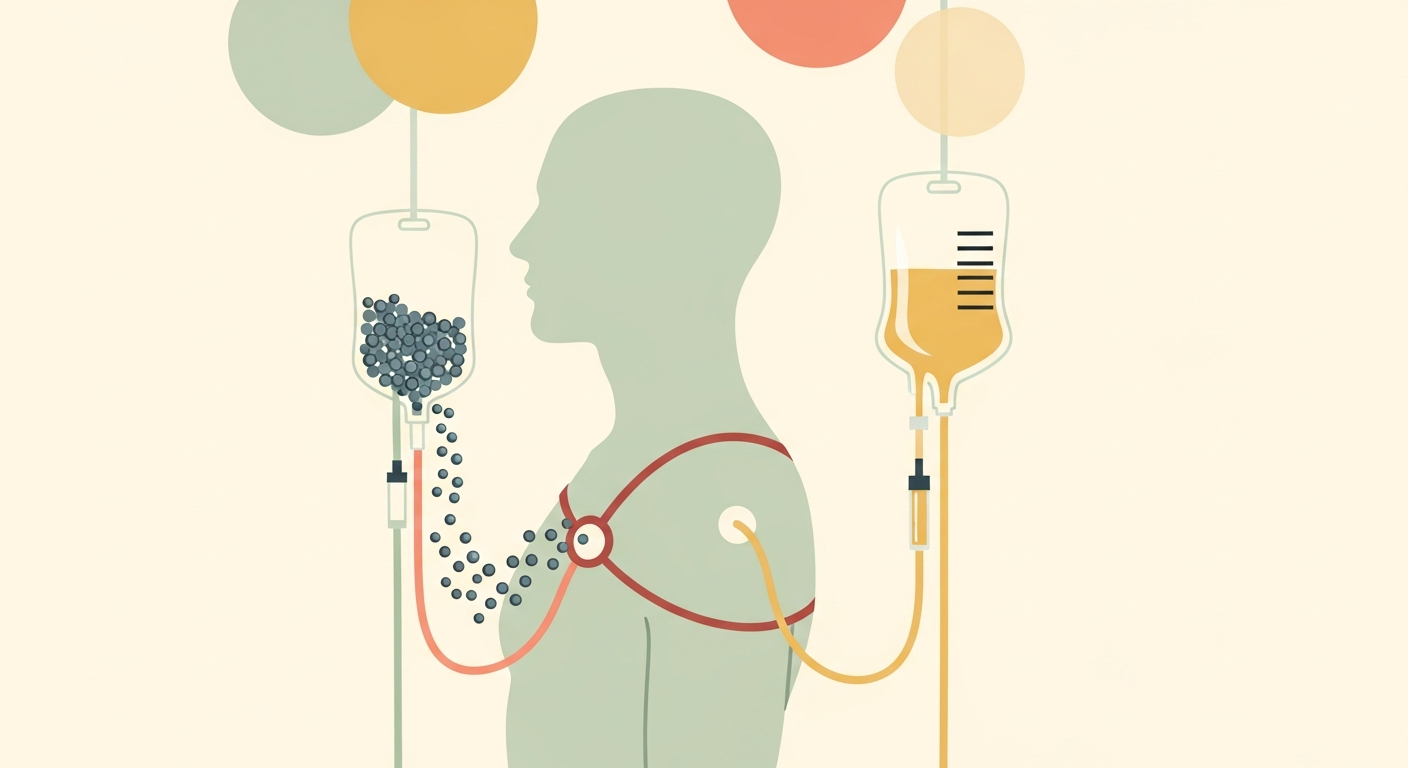
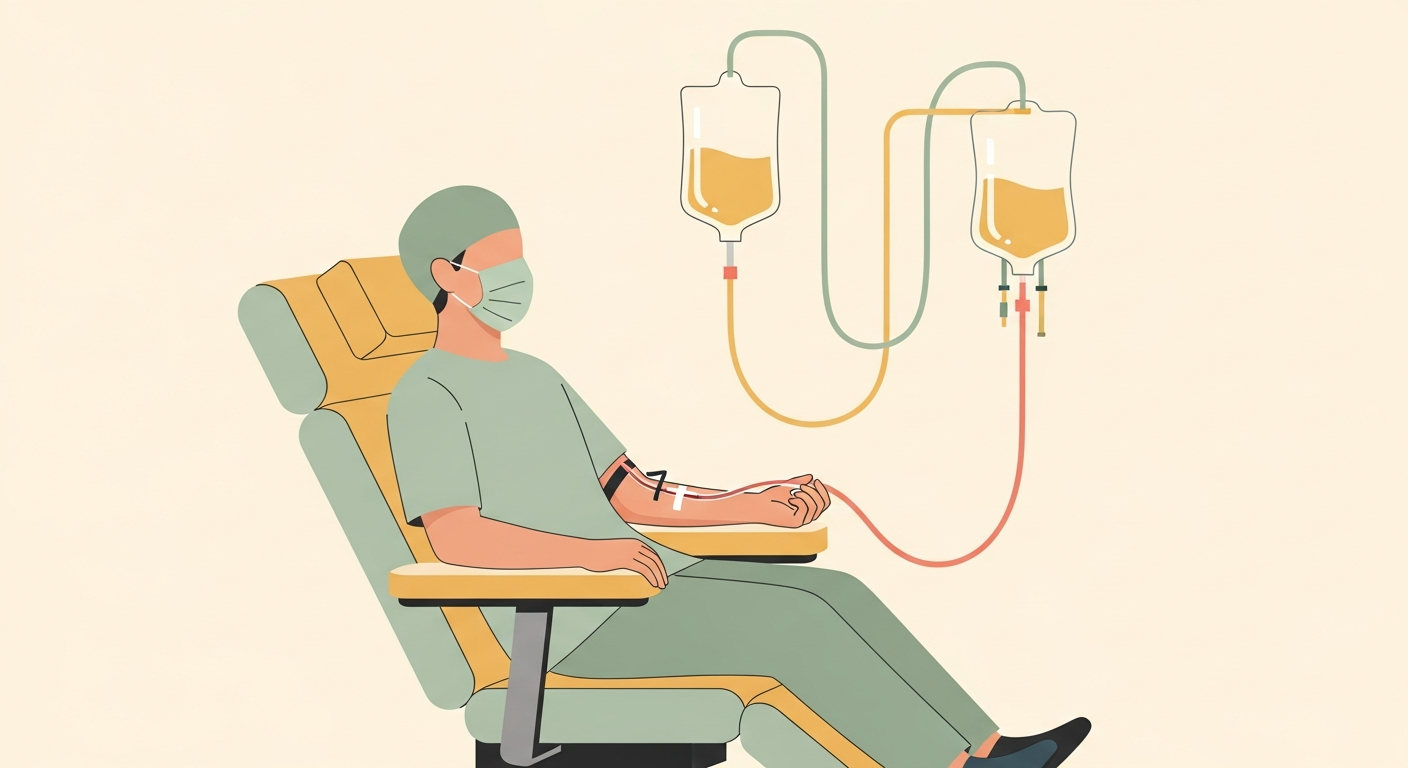
You'll recline in a comfortable treatment chair. The apheresis machine draws blood from one access point, separates plasma from cellular components using centrifugation, discards the plasma (which contains the pathogenic antibodies, immune complexes, or toxins we're targeting), replaces it with albumin solution or donor plasma, and returns the reconstituted blood through the second access point.
The process is continuous and gentle. Most patients:
- Feel a slight coolness as blood returns (the replacement fluid is at room temperature)
- Can read, watch videos, or rest
- Are monitored continuously by trained clinical staff
- Have vital signs checked every 15–30 minutes
A typical session exchanges 1–1.5 plasma volumes, removing approximately 3–4 liters of plasma and replacing it with an equal volume of 5% albumin solution (or occasionally donor plasma in specific clinical scenarios).
Immediately After
Access is removed, pressure is held briefly at the IV sites, and you rest for 10–15 minutes while staff confirms your blood pressure is stable. Most patients can drive themselves home, though we recommend having someone available for your first session until you know how you respond.
Common Transient Side Effects of Therapeutic Plasma Exchange
The majority of TPE side effects are mild, transient, and related to the anticoagulant used during the procedure or to fluid shifts. These are not dangerous—they're physiological responses your body manages well with support.
Citrate-Related Symptoms (Most Common)
To prevent blood from clotting in the extracorporeal circuit, the machine adds citrate anticoagulant. Citrate temporarily binds calcium in your bloodstream. As your liver metabolizes the citrate (usually within 30–60 minutes), symptoms resolve. During or shortly after treatment, you may experience:
- Perioral tingling — a pins-and-needles sensation around your mouth or lips
- Fingertip tingling — similar sensation in your hands or feet
- Muscle cramping — mild twitching or cramping, typically in the hands
- Metallic taste — some patients notice a brief metallic taste
These symptoms affect approximately 20–30% of patients during their first few sessions. Management is straightforward: we slow the return rate slightly, administer oral or IV calcium supplementation, or both. Symptoms resolve within minutes. Patients who've had multiple sessions often don't experience citrate symptoms after their body acclimates.
Transient Hypotension
TPE temporarily removes a volume of fluid from your circulation before replacing it. Some patients—particularly those with autonomic dysfunction, those on antihypertensive medications, or those who are under-hydrated—experience a mild drop in blood pressure. This may manifest as:
- Lightheadedness or dizziness
- Mild nausea
- Feeling flushed or warm
Incidence is approximately 5–10% of sessions. Management includes slowing the procedure temporarily, administering IV saline, and repositioning. We prevent this by ensuring excellent pre-procedure hydration and carefully monitoring blood pressure throughout.
Post-Procedure Fatigue
Many patients feel tired for several hours after TPE—not surprising given that you've had 3–4 liters of plasma removed and replaced. This is not dangerous; it's your body recalibrating. Plan to rest the evening after treatment. Most patients return to normal activities the next day, though some feel more energized once the therapeutic benefit begins (typically after 2–4 sessions).
Bruising at Access Sites
Small bruises at the IV insertion sites are common and cosmetic. They resolve within a week. Patients on antiplatelet therapy or with clotting disorders may bruise more easily.
Rare but Serious Risks of Therapeutic Plasma Exchange
While TPE is considered a safe procedure with a well-established safety profile in the apheresis literature, rare complications can occur. Published complication rates in large case series range from 3–7% per session, with severe complications occurring in less than 1% of procedures.
Allergic or Hypersensitivity Reactions
Albumin (the replacement fluid used in most TPE sessions) is derived from pooled human plasma. Severe allergic reactions are exceedingly rare—estimated at 1 in 10,000 to 1 in 50,000 exposures—but possible. Symptoms might include hives, difficulty breathing, or anaphylaxis. Purety maintains emergency medications on-site, and staff are trained in anaphylaxis management. Patients with known albumin allergy are identified during screening and treated with alternative protocols.
Infection at Vascular Access Site
Any time the skin is punctured, infection risk exists. Peripheral IV infection rates are very low (less than 0.5%) with proper sterile technique. Central venous catheter infections are slightly more common (1–2% with temporary catheters) but are minimized through strict aseptic protocols and prompt catheter removal when no longer needed. Signs of infection—redness, warmth, swelling, fever—should be reported immediately.
Symptomatic Hypocalcemia
While mild tingling from citrate-induced calcium binding is common and benign, severe hypocalcemia is rare but can cause cardiac arrhythmias or seizures in susceptible patients. This is prevented through calcium monitoring, supplementation during the procedure, and slowing citrate administration rates. Patients with preexisting low calcium, hypoparathyroidism, or on certain medications are screened carefully.
Coagulation Changes
TPE removes clotting factors along with pathogenic antibodies. In patients undergoing intensive TPE (daily or every-other-day sessions), clotting times may temporarily prolong. This is monitored with lab work. Purety does not perform procedures on patients with active bleeding or severe coagulopathy. Most patients receiving 1–2 sessions per week maintain normal hemostasis.
Hemodynamic Instability
In patients with severe cardiovascular disease or decompensated heart failure, the fluid shifts during TPE can rarely precipitate pulmonary edema or hypotension requiring intervention. Cardiac patients are evaluated carefully before beginning treatment, and sessions can be modified (smaller exchange volumes, slower flow rates) for higher-risk individuals.
Who Is Not a Candidate for TPE?
Purety conducts thorough screening to ensure TPE is both safe and appropriate for each patient. Absolute and relative contraindications include:
Absolute Contraindications
- Severe cardiovascular instability — uncontrolled arrhythmias, recent myocardial infarction, decompensated heart failure
- Active uncontrolled bleeding — gastrointestinal hemorrhage, intracranial bleed
- Inability to tolerate anticoagulation — severe thrombocytopenia, known severe bleeding disorder
- No achievable vascular access — though central catheters can often solve this
- Allergy to all available replacement fluids — very rare
Relative Contraindications (Require Careful Evaluation)
- Severe anemia — hemoglobin below 7–8 g/dL (may require transfusion first)
- Active infection with hemodynamic compromise — sepsis should be stabilized first
- Pregnancy — TPE can be performed in pregnancy when medically necessary (e.g., TTP, severe autoimmune conditions), but requires specialized protocols
- Severe electrolyte disturbances — corrected before initiating treatment
- Patients on ACE inhibitors — these medications can interact with certain replacement fluids and may need to be held
Dr. Birch reviews each patient's complete medical history, current medications, recent lab work, and treatment goals before determining candidacy. In some cases, optimizing other health parameters first makes TPE safer and more effective.
How Purety Minimizes Risk and Maximizes Safety
Our approach to TPE safety includes:
- Pre-procedure medical evaluation — comprehensive history, physical exam, review of systems
- Baseline laboratory assessment — CBC, comprehensive metabolic panel, coagulation studies, calcium, magnesium
- Individualized treatment protocols — exchange volume, replacement fluid type, and session frequency tailored to your condition and physiology
- Continuous monitoring — pulse oximetry, blood pressure checks, visual assessment by trained clinical staff
- Calcium supplementation protocols — proactive oral or IV calcium to prevent citrate symptoms
- Emergency preparedness — crash cart, emergency medications, staff trained in ACLS
- Post-procedure observation — ensuring stable vitals before discharge
- Clear patient communication — written instructions on what to expect, when to call, how to prepare for subsequent sessions
Comparing TPE to Related Procedures
Patients sometimes ask how TPE differs from other blood-processing procedures. Here's a comparison:
| Procedure | What's Removed | What's Returned | Typical Duration | Primary Purpose |
|---|---|---|---|---|
| Therapeutic Plasma Exchange (TPE) | Plasma (contains antibodies, immune complexes, toxins) | Blood cells + replacement fluid (albumin or donor plasma) | 90–120 minutes | Remove pathogenic substances; treat autoimmune/neuro conditions |
| Plasmapheresis (Plasma Donation) | Plasma (donated for pharmaceutical use) | Blood cells + saline | 60–90 minutes | Collect plasma for manufacturing immunoglobulin, clotting factors |
| Whole Blood Donation | Whole blood (all components) | Nothing (you lose ~10% blood volume temporarily) | 10–15 minutes | Provide blood for transfusion |
| Apheresis (General) | Varies (platelets, white cells, plasma, etc.) | Blood cells minus the collected component | 60–120 minutes | Collect specific blood components or remove pathogenic cells |
TPE is distinct in that it's a therapeutic procedure (intended to treat disease), uses medical-grade replacement fluid to maintain oncotic pressure and coagulation capacity, and is performed under physician supervision with clinical monitoring.
What Patients Report: Real Experiences
While individual experiences vary, common themes emerge from patients who've completed TPE courses at Purety:
First session: "I was nervous, but the staff explained everything. I felt tingling around my mouth halfway through, they gave me calcium, and it went away in five minutes. I was tired that night but fine the next day."
After several sessions: "By my third treatment, I knew exactly what to expect. I brought a book, relaxed, and didn't have any side effects. I started noticing my joint pain decreasing after the fourth session."
Overall: "Much easier than I anticipated. The side effects were minimal compared to some of the medications I'd tried, and I actually felt like my body was getting a 'reset.'"
The key is preparation and communication. Knowing what's normal, what to report, and having a clinical team that responds immediately to your comfort makes the experience manageable.
Preparing for Your TPE Sessions
To minimize side effects and optimize outcomes:
- Hydrate well — drink 24–32 ounces of water in the 2–3 hours before your session
- Eat a light meal — low-fat, moderate protein; avoid heavy, greasy foods immediately before
- Bring calcium-rich snacks — cheese, yogurt, or almonds can help if you experience tingling
- Wear comfortable, loose clothing — you'll be reclined for 90+ minutes
- Bring entertainment — book, tablet, headphones
- List your current medications — especially blood pressure meds, anticoagulants, or supplements
- Communicate — tell staff immediately if you feel lightheaded, nauseous, or notice tingling
Long-Term Safety and Monitoring
For patients undergoing serial TPE (common treatment courses range from 3–10 sessions over 2–6 weeks), Purety monitors:
- Hemoglobin and hematocrit — ensuring you're not becoming anemic
- Albumin levels — though we replace albumin, we verify your body maintains adequate levels
- Immunoglobulin levels — TPE removes immunoglobulins non-selectively; monitoring ensures you maintain enough for infection defense
- Electrolytes — calcium, magnesium, potassium
- Coagulation parameters — in patients on intensive regimens
Published long-term studies of patients receiving regular TPE (as in chronic conditions requiring ongoing treatment) show that, with appropriate monitoring, the procedure can be performed safely for months to years.
When to Seek Immediate Care After TPE
While serious post-procedure complications are rare, contact Purety or seek emergency care if you experience:
- Fever above 100.4°F (may indicate infection)
- Severe swelling, redness, or drainage at the access site
- Chest pain or difficulty breathing
- Severe persistent headache
- Severe muscle cramps or tetany (sustained muscle contraction)
- Signs of allergic reaction (hives, swelling, difficulty breathing) hours after treatment
Purety provides every patient with a 24-hour contact number and clear instructions on what constitutes an emergency.
The Risk-Benefit Calculation
For patients with severe autoimmune conditions unresponsive to conventional therapy, or those carrying a high burden of synthetic chemicals that contribute to chronic inflammation and illness, the risk profile of TPE is generally very favorable compared to the risks of untreated disease or the side effects of long-term immunosuppressive medications.
Consider: systemic corticosteroids (often first-line for autoimmune conditions) carry risks including osteoporosis, diabetes, infection, adrenal suppression, and mood changes. Cytotoxic immunosuppressants carry risks of infection, malignancy, liver toxicity, and bone marrow suppression. Biologics can cost $50,000–$100,000 annually and carry infection and malignancy risks.
TPE offers a physical removal of pathogenic substances—a mechanism fundamentally different from suppressing your immune system. For many patients, the transient tingling and fatigue are trivial compared to the potential for meaningful symptom reduction or disease remission.
TPE in Santa Barbara: Expertise and Experience
Purety Family Medical Clinic is one of the few outpatient centers in California offering therapeutic plasma exchange for both FDA-recognized indications (autoimmune and neurological conditions) and for emerging applications like synthetic chemical and heavy metal removal. Dr. Jonathan Birch, NMD, RMSK, has trained extensively in apheresis medicine and works with a team experienced in managing the nuances of TPE in a naturopathic, integrative context.
Our Santa Barbara location at 2323 Oak Park Ln Suite 102 is equipped with state-of-the-art apheresis technology, private treatment rooms, and a clinical team committed to patient education and comfort. Many of our patients travel from elsewhere in California specifically for TPE because of the combination of clinical expertise, individualized protocols, and integrative support (nutritional optimization, gut health restoration, ozone therapy, and other adjunctive treatments that enhance outcomes).
Next Steps: Is TPE Right for You?
If you're considering therapeutic plasma exchange for an autoimmune condition, a neurological disorder with published evidence supporting TPE, or for removal of environmental toxins, the first step is a comprehensive evaluation. Dr. Birch will review your medical history, current labs, previous treatments, and treatment goals to determine whether TPE is indicated, safe, and likely to benefit your specific situation.
Understanding therapeutic plasma exchange side effects is an important part of informed decision-making. While the procedure carries some transient discomfort and rare risks, the safety profile is well-established, and most patients tolerate treatment very well. The potential for meaningful clinical improvement—often in patients who have exhausted other options—makes TPE a valuable tool in the treatment of complex chronic illness.
To schedule a consultation and discuss whether therapeutic plasma exchange is appropriate for your condition, contact Purety Family Medical Clinic at (805) 500-8300. Our office is located at 2323 Oak Park Ln Suite 102, Santa Barbara, CA 93105. We welcome patients from throughout California who are seeking advanced, evidence-based naturopathic and integrative care.