Therapeutic plasma exchange (TPE) — also called plasmapheresis — is one of the most powerful tools available in integrative and conventional medicine for autoimmune and inflammatory disease. It's also one of the most misunderstood. If you've been recommended TPE, or are researching it independently, this step-by-step guide explains exactly what happens during a session, what you'll experience, and how to know whether you're a candidate.
What Is Therapeutic Plasma Exchange?
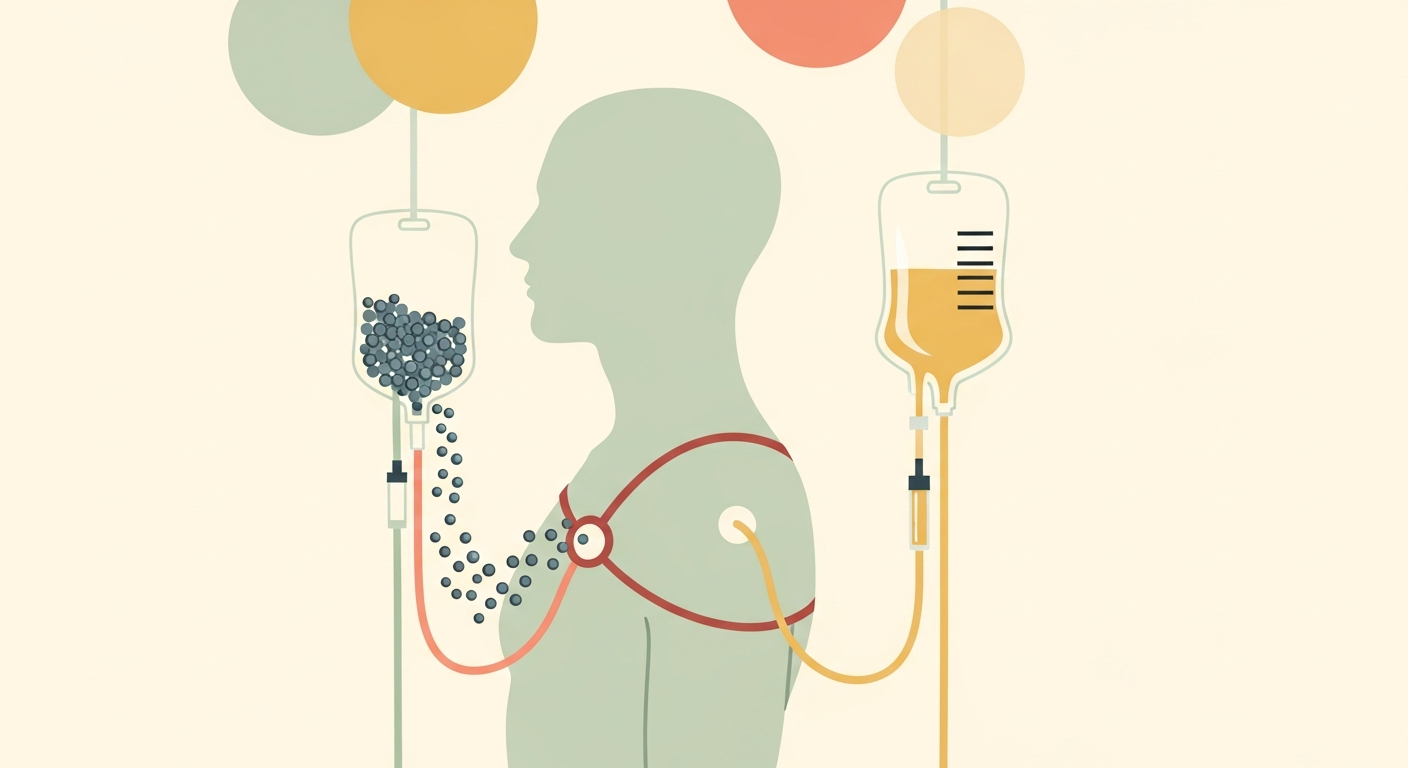
Therapeutic plasma exchange is an extracorporeal procedure — meaning it occurs outside the body in a specialized circuit. Blood is drawn from the patient, passed through a separator that removes the plasma (the liquid portion of blood), and the remaining blood cells are returned along with a replacement fluid. The removed plasma takes with it the pathological substances that are driving disease: autoantibodies, immune complexes, inflammatory cytokines, and other circulating molecules.
Think of it as a systematic "reset" of the immune milieu. Unlike medications that block specific cytokines or receptors, TPE removes a broad range of inflammatory and autoimmune mediators simultaneously. It doesn't cure the underlying condition — autoantibodies will eventually be reproduced — but it can provide a powerful therapeutic window in which the immune system is dramatically quieted and other treatments can work more effectively.
Who Is Therapeutic Plasma Exchange For?
TPE has FDA-approved indications for a long list of conditions, including myasthenia gravis, Guillain-Barré syndrome, CIDP (Chronic Inflammatory Demyelinating Polyneuropathy), thrombotic thrombocytopenic purpura (TTP), and several other neurological and hematological conditions.
Beyond the formal FDA indications, TPE is increasingly used in clinical practice for:
- Autoimmune conditions with active antibody-mediated disease — including lupus, NMDA receptor encephalitis, and refractory rheumatoid arthritis
- Long COVID — particularly in patients with persistent fatigue, cognitive symptoms (brain fog), and autonomic dysfunction. Research groups in Germany and the United States have documented significant improvement in Long COVID patients following TPE, with studies showing reduction in autoantibodies and microclotting markers
- POTS and dysautonomia — many POTS patients have detectable autoantibodies (including adrenergic and muscarinic receptor antibodies) that TPE can reduce, with corresponding improvements in heart rate variability and symptom burden
- Neurological conditions — including MS, neuromyelitis optica spectrum disorder, and post-infectious neurological syndromes
- Longevity and anti-aging protocols — research from Stanford and other centers has explored "young blood" and plasma dilution approaches for cognitive aging and biological rejuvenation
Step-by-Step: What Happens During a TPE Session
Before You Arrive
At Purety Clinic, TPE begins with a comprehensive consultation. We review your medical history, current labs, diagnosis, and treatment goals. We assess your IV access — most patients receive TPE through peripheral IV lines in both arms, though patients with difficult access may need a temporary central line. We also review replacement fluid options (typically albumin, sometimes fresh frozen plasma depending on the indication) and discuss the planned number of sessions.
Step 1: IV Access and Setup
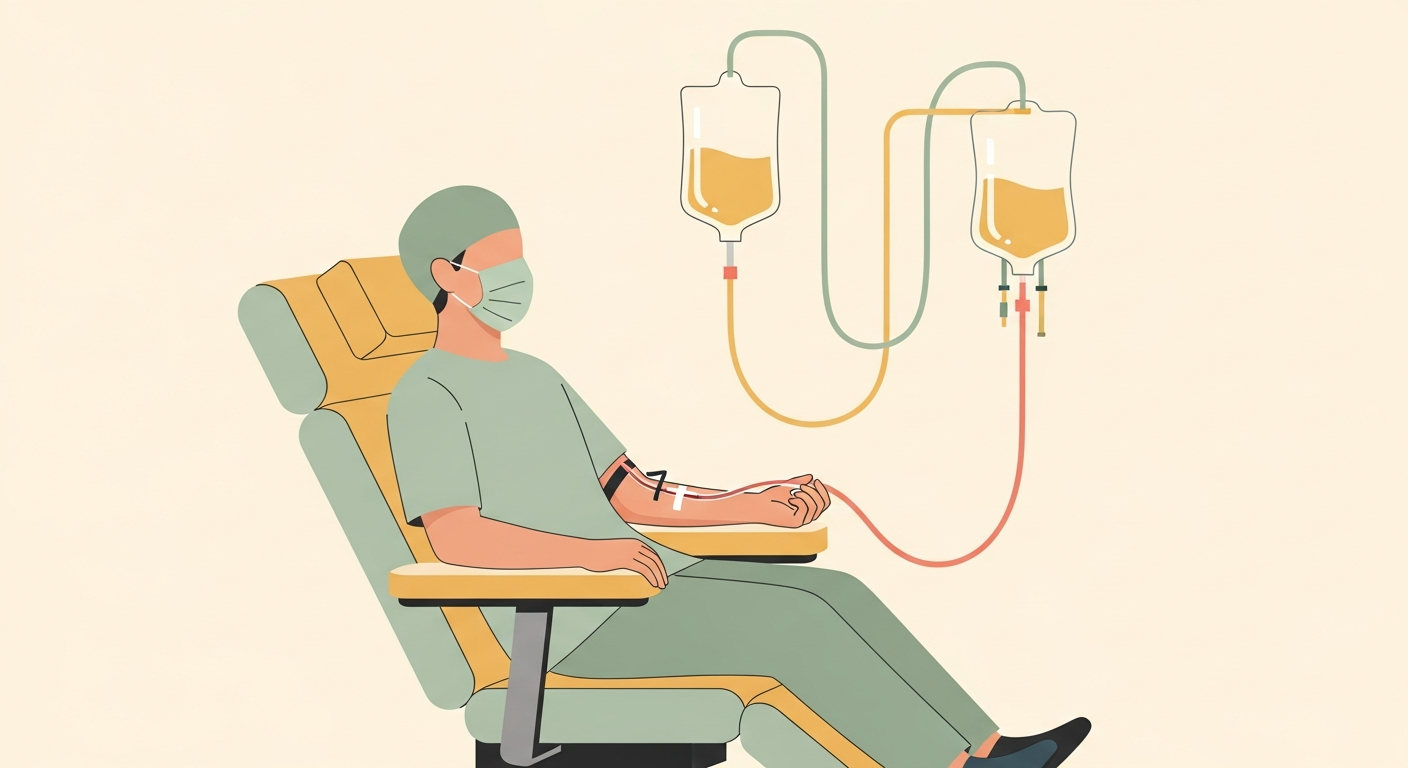
Two peripheral IV lines are established — one in each arm. One line draws blood out; the other returns processed blood. This typically takes 10–15 minutes. The apheresis machine is prepared and primed. Most patients find the IV placement to be the most uncomfortable part of the entire procedure.
Step 2: The Exchange Begins
Blood flows from the draw line into the apheresis machine, where the plasma is separated from the red blood cells, white blood cells, and platelets. The plasma is collected for disposal. The remaining blood cells are combined with replacement albumin (or other replacement fluid) and returned through the return IV.
A single TPE session typically exchanges 1–1.5 plasma volumes — roughly 2.5–4 liters of plasma, depending on body size. This takes approximately 2–3 hours.
Step 3: What You Feel During the Session
Most patients find TPE surprisingly tolerable. Common experiences during the session include:
- Mild tingling or numbness around the lips, fingers, or toes — caused by calcium reduction from the citrate anticoagulant used to prevent clotting in the circuit. We supplement calcium during the session to minimize this.
- A sense of cold or chill as the blood returns to the body at a slightly lower temperature than body temperature. We use warming blankets to manage this.
- Lightheadedness in some patients, particularly early in the session or if fluid replacement lags. We monitor vital signs throughout and adjust flow rates as needed.
- Most patients feel fine — reading, on their phone, or relaxing. The session is not painful once IV access is established.
Step 4: After the Session
When the exchange is complete, the IV lines are removed and the access sites are dressed. Most patients feel well immediately after TPE, though some experience mild fatigue lasting a few hours. Some patients — particularly those with Long COVID or active autoimmune disease — notice improvement in their symptoms within 12–48 hours of the first session. Others experience a gradual improvement over the course of their treatment series.
We recommend eating a normal meal before the session, staying well-hydrated, and having someone available to drive if this is your first session.
How Many Sessions Will I Need?
This depends entirely on the indication and the individual patient. Acute autoimmune neurological conditions (like Guillain-Barré or myasthenic crisis) may require a 5-session series over 10 days. Long COVID and POTS protocols typically involve 5–10 sessions over several weeks, often followed by periodic maintenance sessions. Patients undergoing TPE for longevity protocols typically have 2–4 sessions.
We use lab markers — including specific autoantibody titers, inflammatory cytokines, and clinical symptom tracking — to guide the number and frequency of sessions.
What Makes Our Setup Different
Purety Family Medical Clinic is one of the few outpatient integrative clinics in California offering therapeutic plasma exchange. Our approach is to use TPE as part of a comprehensive protocol — not as a standalone intervention. For autoimmune patients, we combine TPE with naturopathic primary care, nutritional optimization, and other immune-modulating therapies. For Long COVID patients, TPE is integrated into a broader protocol addressing mitochondrial dysfunction, autonomic function, and microbiome health. For POTS and dysautonomia patients, we address the autonomic, inflammatory, and autoimmune components in parallel.
Local TPE Patients We Serve
Purety Family Medical Clinic is based in Santa Barbara, California, and most of our therapeutic plasma exchange patients drive in from elsewhere along the central and southern California coast. We offer dedicated information for patients searching from the cities below — each page outlines local access, parking, drive times, and what to expect when you travel to our outpatient TPE suite:
- Therapeutic plasma exchange in Santa Barbara, CA — our home location
- Therapeutic plasma exchange in Goleta, CA
- Therapeutic plasma exchange in Ventura, CA
- Therapeutic plasma exchange in Los Angeles, CA
- Therapeutic plasma exchange in Beverly Hills, CA
- Therapeutic plasma exchange in Santa Monica, CA
To learn more about therapeutic plasma exchange at Purety Clinic or to schedule a consultation, call (805) 500-8300 or submit a request online.