When mycotoxin levels refuse to budge despite months of binders, avoidance, and supportive care, the question becomes: what is keeping these toxins in circulation? For many patients with chronic mold illness, the answer lies in plasma protein binding. This case report documents the mycotoxin clearance achieved in one patient through therapeutic plasma exchange for mold toxicity—a treatment approach that directly removes the protein-bound toxins conventional therapies cannot reach.
The Case at a Glance: Mycotoxin Levels Before and After TPE
This patient had a significant history of mold exposure and whole body inflammation symptoms, so we recommended urine mycotoxin testing here at Purety Clinic on March 10, 2025, revealing severely elevated toxic mycotoxin levels. Following five therapeutic plasma exchange (TPE) treatments delivered over the subsequent months, repeat testing on December 2, 2025 demonstrated the following reductions:
| Mycotoxin | Pre-TPE (ng/g creatinine) | Post-TPE (ng/g creatinine) | Reduction |
|---|---|---|---|
| Ochratoxin A | 11.221 (high/red zone) | 0.813 (low/green zone) | 92.7% |
| Aflatoxin | 1.686 (red zone) | 0.715 (low/green zone) | 57.6% |
| Trichothecene | 0.403 | 0.156 | 61.3% |
| Gliotoxin | 4.147 (red zone) | 0.699 (orange/borderline) | 83.1% |
| Zearalenone | 1.554 | 0.609 | 60.8% |

The most striking reduction was in ochratoxin A, which fell from a severely elevated level to well within normal range—a 92.7% decrease that moved the patient from the high-risk red zone to the low-green zone on the laboratory reference range.
Pre and post mycotoxin urine test results showing dramatic reductions in ochratoxin, aflatoxin, trichothecene, gliotoxin, and zearalenone after 5 therapeutic plasma exchange treatments. This patient experienced a dramatic reduction in brain fog and inflammation, increase in energy, and overall greatly enhanced daily function.Why Mycotoxins Are Notoriously Difficult to Clear
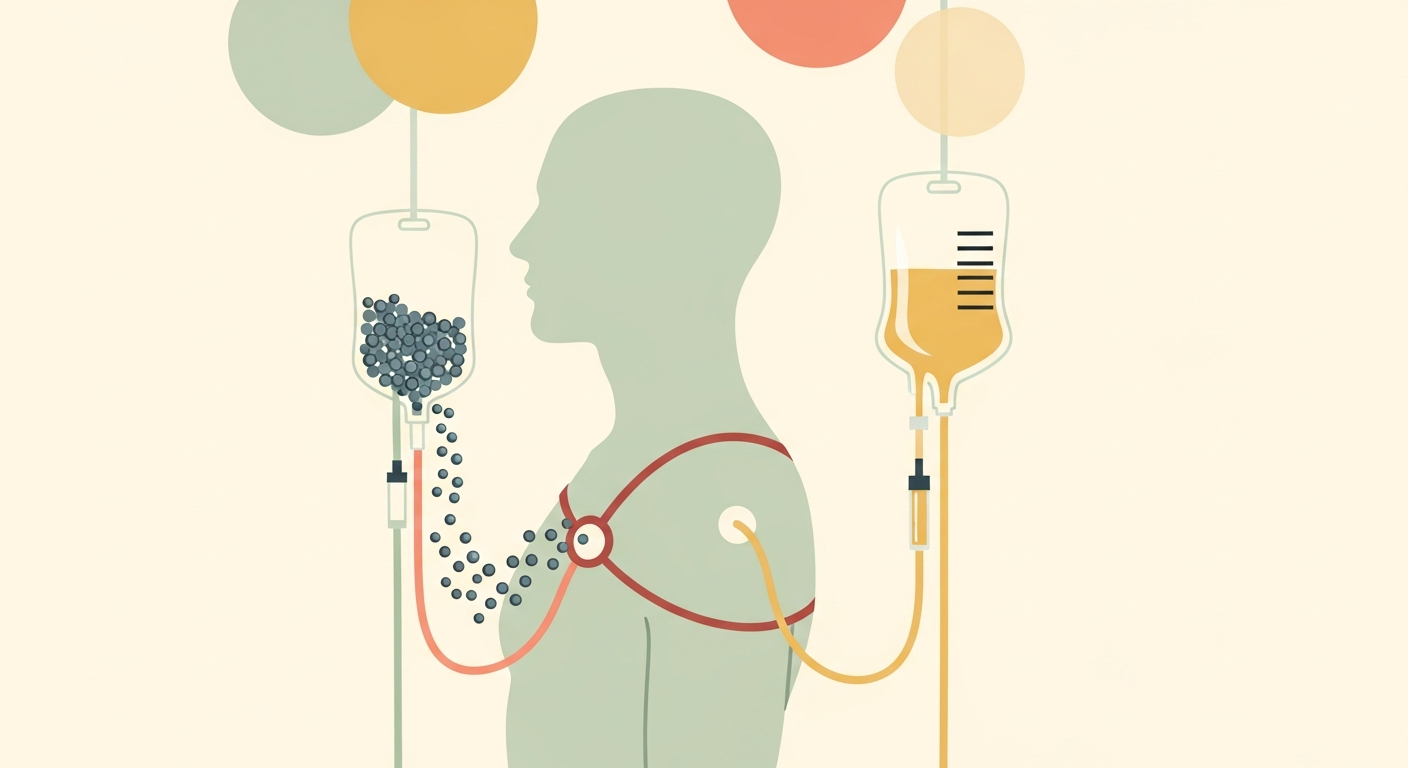
Mycotoxins—toxic metabolites produced by mold species—present a unique clearance challenge because of their affinity for plasma proteins, particularly albumin. Ochratoxin A, for example, has been shown in published studies to bind albumin with high affinity, creating a reservoir of toxin that recirculates rather than being eliminated through normal detoxification pathways.
Traditional detoxification strategies—activated charcoal, cholestyramine, clay binders, sauna, and nutritional support—work by interrupting enterohepatic recirculation or promoting excretion of free (unbound) toxins. While these approaches are foundational and necessary, they do not directly address the protein-bound fraction in the bloodstream. This is why many patients plateau: the toxins bound to albumin remain in circulation, beyond the reach of oral binders or hepatic conjugation.
The Protein-Binding Problem
Once a mycotoxin binds to albumin or other carrier proteins, it essentially becomes "invisible" to many elimination pathways. The liver can only conjugate and excrete what it can access in free form. Kidney filtration is similarly limited. The bound toxin recirculates, potentially redistributing to tissues and perpetuating inflammatory cascades, mitochondrial dysfunction, and immune dysregulation—all hallmarks of chronic mold illness.
How Therapeutic Plasma Exchange Addresses Protein-Bound Toxins
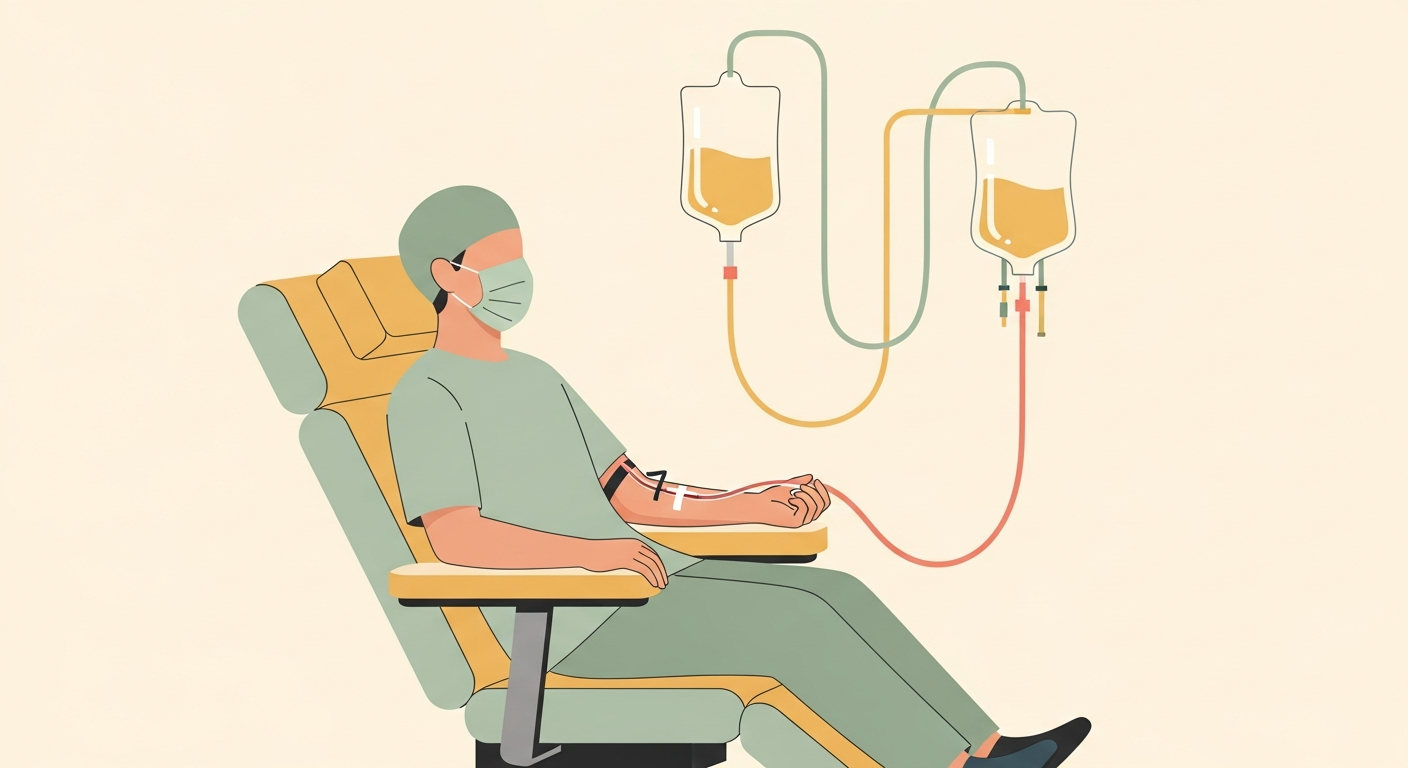
Therapeutic plasma exchange for mold toxicity operates on a fundamentally different principle than conventional detox. During TPE, approximately 1.0 to 1.5 plasma volumes are removed from the patient's circulation and replaced with sterile albumin solution and/or balanced crystalloid. Because mycotoxins are bound to the plasma proteins being removed, they are physically extracted from the body along with the discarded plasma.
The procedure is performed using apheresis equipment similar to that used in hospital-based TPE for autoimmune conditions. At Purety Family Medical Clinic in Santa Barbara, we use a closed-loop centrifugal separator that isolates plasma from cellular blood components, discards the plasma (and its protein-bound cargo), and returns the patient's own red cells, white cells, and platelets along with replacement fluid.
Why Five Treatments?
In this case, the patient completed five TPE sessions. The rationale for a series rather than a single treatment is straightforward: mycotoxins stored in tissues (fat, liver, brain, kidneys) will redistribute into plasma over time. A single session can reduce circulating levels temporarily, but as the body re-equilibrates, levels may rebound. Serial treatments—typically spaced one to two weeks apart—allow for progressive depletion of both circulating and tissue-stored toxins.
The exact number of sessions is individualized based on pre-treatment toxin burden, clinical response, and repeat testing. Some patients may respond adequately to three or four sessions; others with severe, multi-mycotoxin exposure may benefit from six or more. We monitor closely and adjust the protocol accordingly.
Clinical Context and Important Caveats
This case report documents the outcome in a single individual and should not be interpreted as a guarantee of similar results in other patients. Response to therapeutic plasma exchange for mold toxicity varies based on numerous factors, including:
- Duration and intensity of mold exposure
- Genetic polymorphisms affecting detoxification (e.g., HLA-DR status, glutathione pathway variants)
- Baseline kidney and liver function
- Concurrent mycotoxin source avoidance and environmental remediation
- Overall health status and comorbid conditions
It is also critical to emphasize that TPE is not a substitute for source removal. If the patient is still living or working in a water-damaged environment, new exposure will continue to occur. Environmental assessment, remediation, and ongoing avoidance are non-negotiable components of any comprehensive mold illness treatment plan.
Medical Workup Is Required
Not every patient with mycotoxin exposure is an appropriate candidate for TPE. Before proceeding, we conduct a thorough naturopathic and functional medicine workup, including:
- Comprehensive mycotoxin and environmental toxin panels
- Complete blood count, metabolic panel, coagulation studies
- Immunoglobulin levels and immune function markers
- Assessment of vascular access and tolerance for apheresis
- Review of medications, supplements, and contraindications
Therapeutic plasma exchange is a medical procedure with real physiological effects. It must be performed under the supervision of a physician trained in apheresis and experienced in treating complex chronic illness.
Why We Offer TPE in Santa Barbara
Purety Family Medical Clinic is one of the few outpatient practices in California offering therapeutic plasma exchange for environmental toxin removal. Under the direction of Dr. Jonathan Birch, NMD, RMSK, we have developed protocols that integrate TPE with naturopathic medicine, addressing not only toxin clearance but also immune restoration, mitochondrial support, and gut healing.
Our patients often come to Santa Barbara after exhausting conventional mold illness treatments elsewhere. They are educated, investigative, and looking for evidence-based approaches that go beyond the standard protocol. TPE represents a logical extension of detoxification science—removing what the body cannot eliminate on its own.
Along with using TPE for longevity protocols, we also offer TPE for autoimmune conditions, neurological conditions where research supports its use, and removal of synthetic chemicals and heavy metals, as outlined in recent medical literature including a 2025 study in Medical Hypotheses.
Next Steps: Schedule a Consultation
If you are dealing with chronic mold illness, elevated mycotoxin levels that have not responded to conventional detoxification, or complex multi-system symptoms consistent with biotoxin exposure, we encourage you to explore whether therapeutic plasma exchange may be appropriate for your case.
Therapeutic Plasma Exchange (TPE) is not covered by insurance in our outpatient setting. Treatment is fee-for-service, and we provide detailed cost estimates during the initial consultation.
To discuss your case with our team or schedule a consultation with Dr. Birch:
Purety Family Medical Clinic
2323 Oak Park Ln Suite 102
Santa Barbara, CA 93105
Phone: (805) 500-8300
You can also learn more about our approach on our TPE Santa Barbara page or explore related topics in our blog.