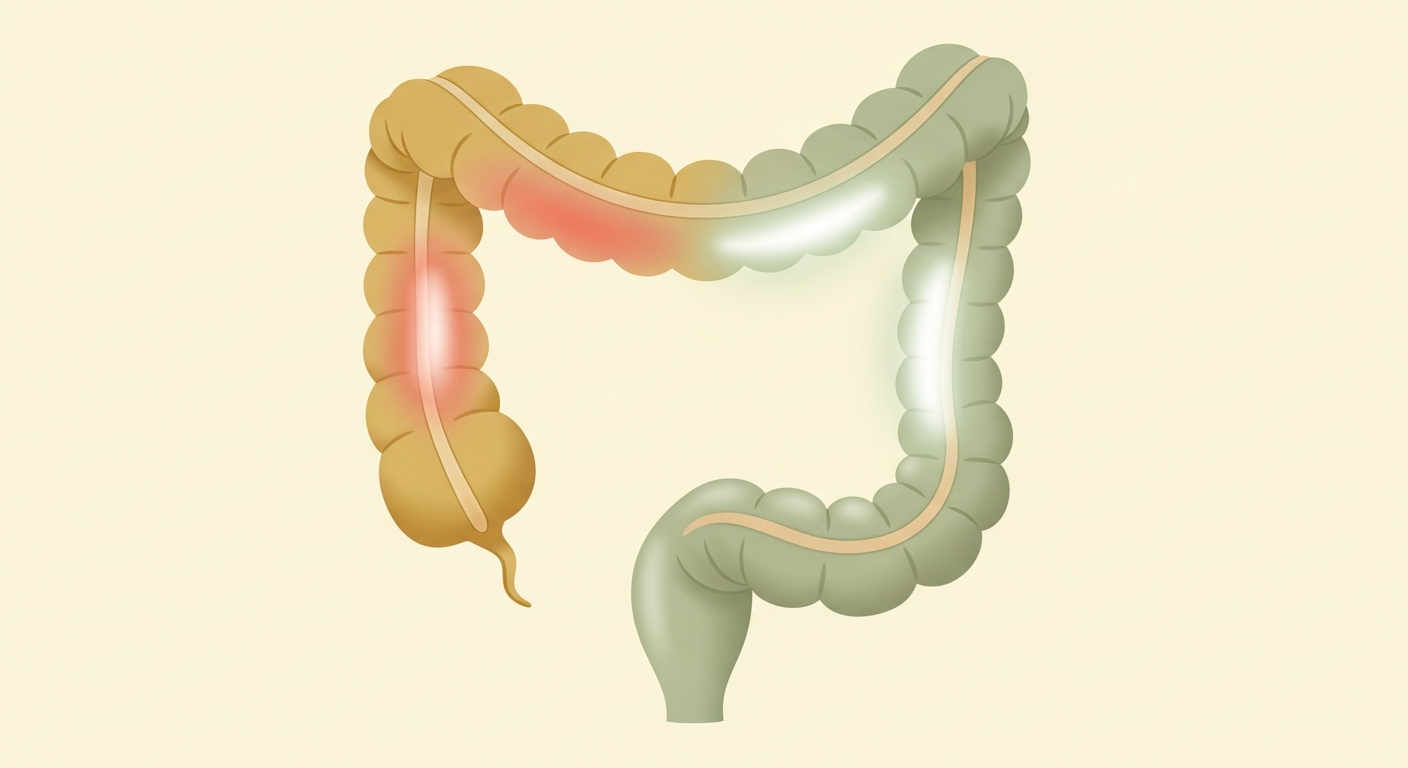
Ulcerative colitis (UC) is a chronic inflammatory bowel disease characterized by diffuse inflammation of the colonic mucosa, resulting in diarrhea, rectal bleeding, abdominal pain, and significantly reduced quality of life. Despite advances in biological therapies — anti-TNF agents, integrin inhibitors, JAK inhibitors — a substantial proportion of UC patients fail to achieve or maintain remission, and long-term immunosuppression carries its own risks. This has driven researchers to investigate whether restoring the gut microbiome through Fecal Microbiota Transplantation could offer a different mechanism of remission induction.
The Microbiome in Ulcerative Colitis
The relationship between the gut microbiome and UC is one of the best-characterized in all of gastroenterology. Patients with active UC consistently show reduced microbial diversity, decreased abundance of butyrate-producing bacteria (particularly Roseburia hominis and Faecalibacterium prausnitzii), and increased concentrations of potentially pathogenic species in the Enterobacteriaceae family.
Butyrate — a short-chain fatty acid produced by bacterial fermentation of dietary fiber — is critically important to colonic health. It serves as the primary fuel for colonocytes (the cells lining the colon), maintains the intestinal mucus layer, and has direct anti-inflammatory effects. Depleted butyrate production is thought to be a key driver of the impaired mucosal barrier and persistent inflammation seen in UC. FMT's ability to restore butyrate-producing bacterial populations is a central mechanism of interest.
The Randomized Controlled Trials
Unlike many areas of FMT research, ulcerative colitis has been studied in multiple well-designed randomized controlled trials. Here's a summary of the key findings:
The Moayyedi Trial (Gastroenterology, 2015): This landmark Canadian study randomized 75 patients with mild-to-moderate active UC to receive weekly FMT enemas or placebo for six weeks. At week seven, 24% of FMT patients achieved remission compared to 5% in the placebo group — a statistically significant difference. Notably, donor variation played a major role: most successful remissions were attributable to stool from a single donor, again pointing to the super-donor phenomenon.
The Paramsothy Trial (Lancet, 2017): This larger Australian trial enrolled 81 UC patients who received intensive FMT (five infusions per week via colonoscopy for eight weeks) or placebo. Remission was achieved in 32% of FMT patients versus 9% of controls — a meaningful difference for a patient population that often exhausts conventional options. The intensive delivery protocol used here is worth noting: more frequent dosing appeared to improve outcomes.
The Rossen Trial (Gastroenterology, 2015): A Dutch study randomizing 48 UC patients to FMT or autologous (own stool) placebo, delivered via nasoduodenal tube. At twelve weeks, 30% of FMT patients achieved clinical remission or response versus 20% in the placebo group — a trend toward benefit that did not reach statistical significance in this smaller trial, but aligned directionally with the other studies.
A 2019 meta-analysis in Gut pooling data from these and other trials found that FMT was associated with significantly higher rates of clinical remission in UC compared to placebo, with an odds ratio of 2.89. The authors concluded that FMT shows "modest but consistent benefit" for mild-to-moderate UC.
The Super Donor Question
One of the most striking and consistent findings across UC trials is the outsized importance of donor selection. In both the Moayyedi and Paramsothy trials, a single donor accounted for the majority of clinical responses. Patients receiving material from this donor had dramatically higher remission rates than those receiving material from other donors, even though all donors passed standard screening.
This super-donor phenomenon has significant implications for clinical practice. It suggests that not all FMT preparations are equivalent — the specific microbial composition of the donor material matters enormously. Research is ongoing to characterize what makes a donor "super" for UC specifically, with candidates including high abundance of Lachnospiraceae and Ruminococcaceae families and robust butyrate production capacity.
Where the Research Stands Today
FMT remains investigational for ulcerative colitis — it is not FDA-approved for this indication, and the evidence, while promising, is not yet at the level required for guideline-based recommendation. The American Gastroenterological Association and the British Society of Gastroenterology both note FMT's potential for UC while acknowledging the need for larger, better-standardized trials.
Several ongoing trials are addressing the key variables: optimal donor selection, delivery route (colonoscopy vs. enema vs. capsule), dosing frequency, and which patient subgroups benefit most. Results from these trials over the next several years will substantially clarify FMT's role in UC management.
For UC patients who are interested in what the current research shows and how microbiome science is evolving in the context of inflammatory bowel disease, I'm glad to have that conversation. To learn more about our approach, visit our FMT services page. Schedule a consultation and we can review the literature together in the context of your specific situation.
For related microbiome research, see our companion reviews of FMT and Crohn's disease (the other major form of inflammatory bowel disease), FMT for IBS, and FMT for SIBO.
About the Author
Dr. Jonathan Birch, NMD
Medical Director at Purety Family Medical Clinic and one of the most experienced Fecal Microbiota Transplant clinicians in the United States — over 1,000 FMT procedures since 2014.
To learn more about our protocols, donor screening, and delivery methods, visit the main FMT services page. California patients can also see FMT availability across California.