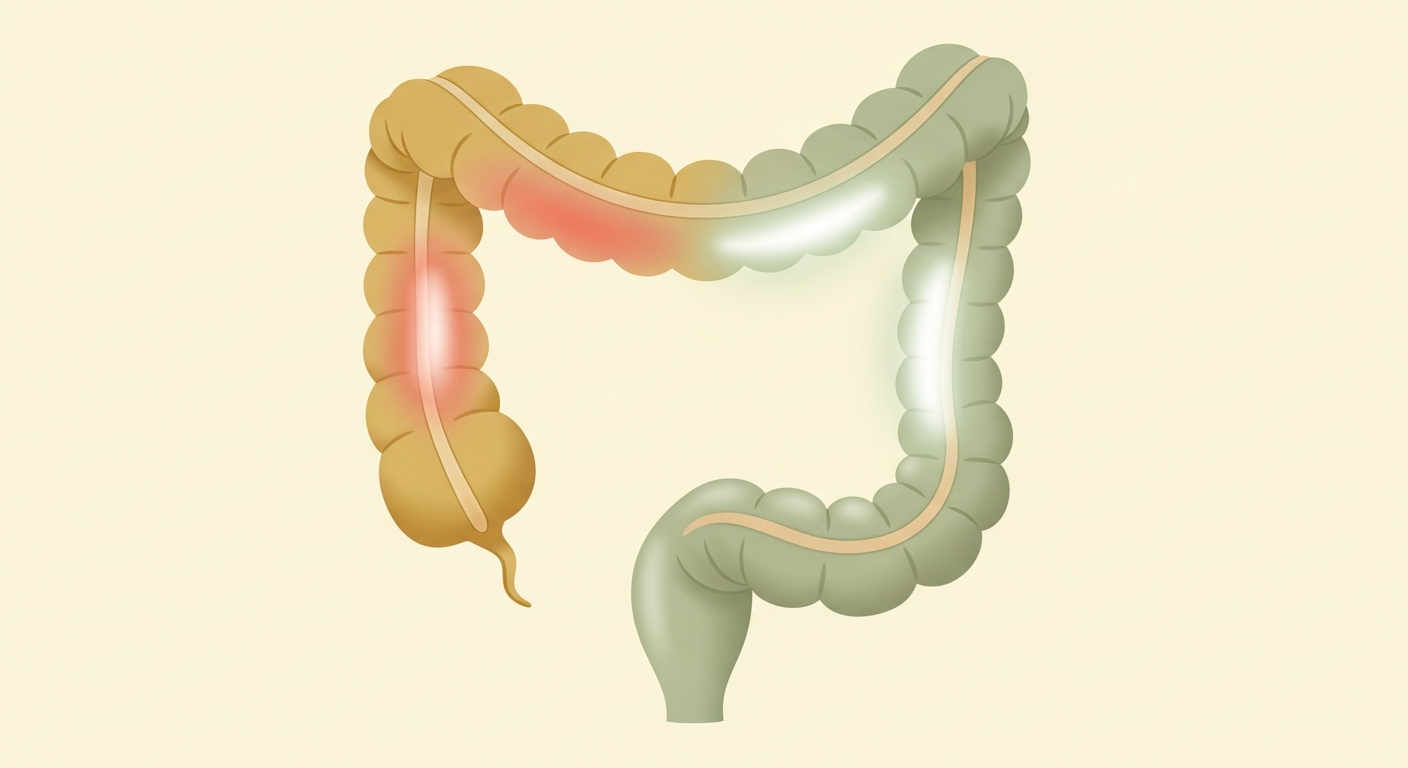
Small Intestinal Bacterial Overgrowth — commonly known as SIBO — is one of the most frustrating conditions I see in clinical practice. Patients come to us having done multiple rounds of rifaximin, followed every elemental diet protocol, and still find themselves dealing with bloating, gas, and discomfort months later. The core problem isn't that antibiotics don't work — they often do, temporarily. The problem is that they don't address the underlying reason the bacterial overgrowth keeps coming back. That's why the emerging research on Fecal Microbiota Transplantation (FMT) and SIBO has caught my attention.
Why SIBO Is So Hard to Treat Long-Term
SIBO occurs when bacteria that normally reside in the large intestine migrate into and colonize the small intestine, where they don't belong. The small intestine is designed to absorb nutrients, not host large microbial populations. When bacteria set up camp there, they ferment carbohydrates before your body can absorb them, producing hydrogen, methane, or hydrogen sulfide gas — depending on which bacterial species are dominant.
The conventional treatment is rifaximin (Xifaxan), a minimally absorbed antibiotic that targets small intestinal bacteria without significantly disrupting the rest of the gut. It works well for hydrogen-dominant SIBO. Neomycin is often added for methane-dominant cases. But here's the problem that the research has consistently documented: relapse rates are high. Studies have shown that 44% of SIBO patients experience recurrence within nine months of successful antibiotic treatment.
Why does SIBO keep coming back? Because antibiotics treat the symptom — the bacterial overgrowth itself — but not the root cause, which is often a dysfunctional gut microbiome in the large intestine that creates an environment permissive to overgrowth. When your colonic microbiome is depleted, diverse, or imbalanced — a state called dysbiosis — it loses its competitive advantage over incoming bacteria from the stomach and small intestine. Restoring that competitive advantage is where FMT research becomes interesting.
The Research on FMT for SIBO
The scientific literature on FMT specifically for SIBO is still early — most FMT research has focused on Clostridioides difficile infection, where the evidence is overwhelming and the FDA approved the first FMT-derived product (Rebyota) in 2022. But SIBO researchers are beginning to explore whether the same principle — restoring a healthy, diverse gut microbiome — could interrupt the SIBO recurrence cycle.
A 2019 case series published in Gut Microbes documented patients with refractory SIBO (meaning SIBO that kept coming back despite appropriate antibiotic treatment) who received FMT. The authors noted improvements in both hydrogen breath test results and patient-reported symptoms in a subset of patients. While this was a small study and not a randomized controlled trial, it generated enough interest to prompt further investigation.
More relevant to the mechanism, a 2022 review in Nutrients examining the relationship between gut microbiome composition and SIBO concluded that dysbiosis of the colon — particularly reduced diversity and depletion of key bacterial species like Lactobacillus and Bifidobacterium — is consistently associated with SIBO. The authors proposed that microbiome restoration strategies, including FMT, warrant further study as adjuncts to conventional antibiotic treatment.
From a mechanistic standpoint, this makes sense. FMT from a healthy donor introduces a complete, diverse microbial ecosystem. This diverse community is thought to competitively exclude opportunistic bacteria through a combination of direct competition for nutrients, production of antimicrobial peptides, and modulation of intestinal motility — all of which are relevant to SIBO pathophysiology.
The Gut Motility Connection
One of the often-overlooked contributors to SIBO is impaired gut motility — specifically, dysfunction of the migrating motor complex (MMC), the "housekeeping wave" of intestinal contractions that sweeps bacteria out of the small intestine between meals. Research published in the American Journal of Gastroenterology has shown that the gut microbiome significantly influences MMC function, and that dysbiosis can impair this motility mechanism.
This creates a potential bidirectional relationship: dysbiosis impairs the MMC, which allows bacteria to accumulate in the small intestine, causing SIBO, which further disrupts the microbiome. FMT's ability to restore a healthier microbial baseline could theoretically help restore MMC function as part of a comprehensive SIBO management approach.
What This Means Clinically
I want to be clear that FMT is not an established, FDA-approved treatment for SIBO. The evidence base is preliminary, and we don't yet have large randomized controlled trials demonstrating efficacy for this specific indication. What the emerging literature does suggest is that microbiome restoration strategies are a logical target for addressing the root-cause dysbiosis that makes SIBO so difficult to eliminate permanently.
At our clinic, we approach SIBO comprehensively — including breath testing for diagnosis, appropriate antibiotic protocols, dietary strategies (elemental diet, low-FODMAP), motility support, and in some cases, microbiome restoration. For patients who have had multiple SIBO recurrences and are interested in exploring every evidence-based option, a discussion about the current FMT research may be part of that conversation.
Many SIBO patients also carry an IBS diagnosis or have features of inflammatory bowel disease, so the same microbiome-restoration questions show up across these conditions. If you'd like to keep reading, see our companion reviews of FMT for IBS, FMT for ulcerative colitis, and FMT and Crohn's disease.
If you've been dealing with recurring SIBO and want to discuss what the current research suggests about microbiome-based approaches, I'd encourage you to schedule a consultation. You can also learn more about our FMT program at Purety Clinic. Every patient's situation is different, and the right approach depends on your specific history, test results, and health goals.
About the Author
Dr. Jonathan Birch, NMD
Medical Director at Purety Family Medical Clinic and one of the most experienced Fecal Microbiota Transplant clinicians in the United States — over 1,000 FMT procedures since 2014.
To learn more about our protocols, donor screening, and delivery methods, visit the main FMT services page. California patients can also see FMT availability across California.