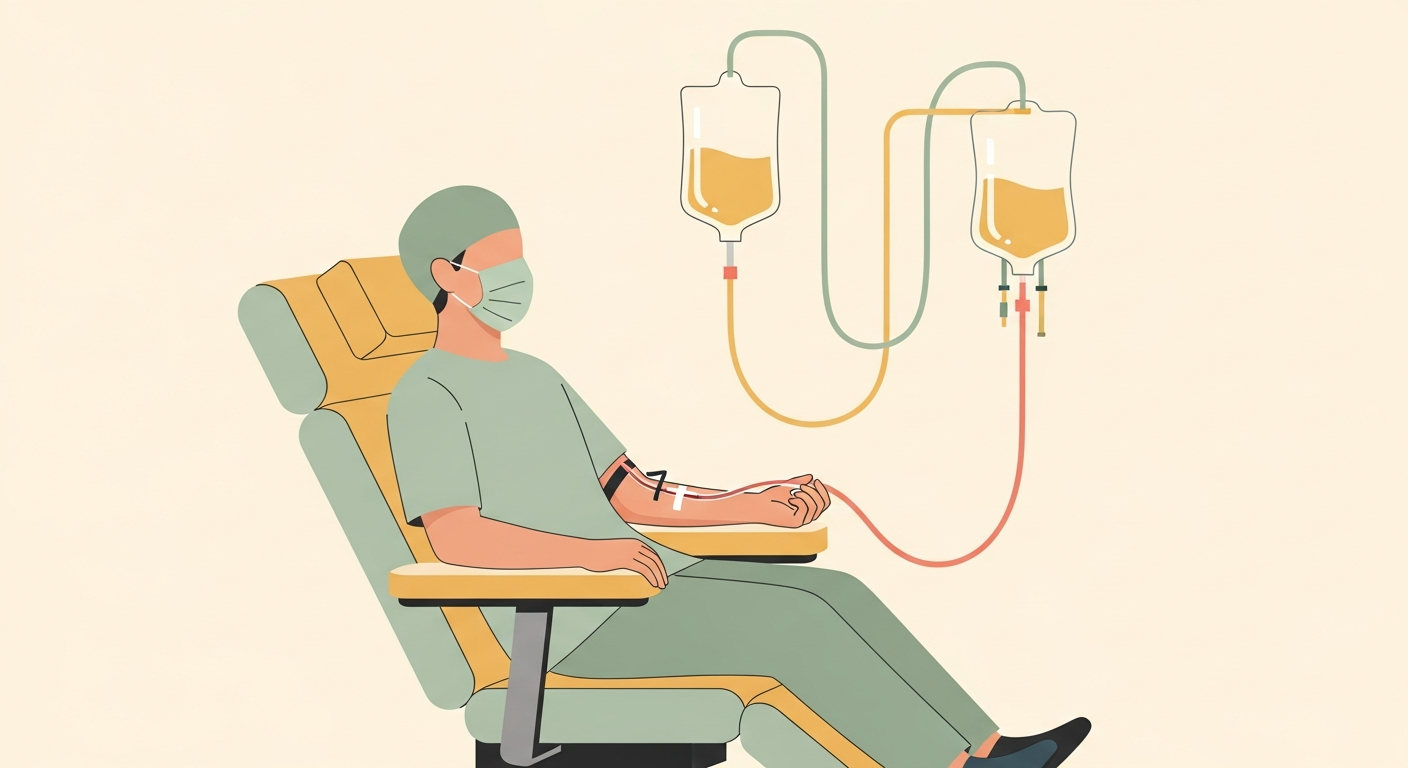
Brain fog from mold exposure and environmental chemical toxicity represents one of the most frustrating medical experiences: you know something is wrong, you've tried every detox protocol available, yet the cognitive cloudiness persists. For many patients, the missing piece is understanding that certain toxins bind tightly to plasma proteins and resist conventional detoxification methods. Therapeutic plasma exchange (TPE) addresses this limitation by physically removing toxin-laden plasma and replacing it with clean albumin solution.
Why Brain Fog Persists After Conventional Detox
Patients who develop neurological symptoms following mold exposure or chronic low-level chemical exposure often report a constellation of cognitive complaints: difficulty concentrating, word-finding problems, mental fatigue that worsens throughout the day, and the sensation of thinking through fog. These symptoms can persist for months or years, even after environmental remediation and aggressive use of sauna therapy, binders like cholestyramine or activated charcoal, and nutritional support protocols.
The reason these approaches sometimes fail relates to basic biochemistry. Many environmental toxins—including mycotoxins from water-damaged buildings, pesticides like glyphosate, plasticizers such as bisphenol A (BPA), and preservatives including butylparaben—bind extensively to plasma proteins, particularly albumin. Once bound, these compounds become too large to cross into bile, too stable to be mobilized by sweating, and too sequestered to be captured by oral binders traveling through the intestinal tract.
The Protein-Binding Problem
Research on chemical bioaccumulation demonstrates that lipophilic compounds with high protein-binding affinity accumulate in blood and tissues over time. Unlike water-soluble toxins that the kidneys can readily filter, protein-bound toxins circulate for extended periods, continuously crossing the blood-brain barrier and contributing to ongoing neuroinflammation. This creates a vicious cycle: the toxins drive inflammation, the inflammation impairs detoxification capacity, and conventional approaches cannot access the bound compounds.
For patients with post-mold-illness brain fog, this explains the phenomenon of feeling temporarily better after intense sauna sessions or binder protocols, only to relapse within days. You're addressing the small fraction of unbound toxin while the reservoir of protein-bound compounds remains untouched.
How Therapeutic Plasma Exchange Removes Protein-Bound Toxins
Therapeutic plasma exchange works through a fundamentally different mechanism than traditional detoxification methods. During a TPE session, blood is withdrawn from the patient, passed through a medical device that separates plasma from cellular components, and the plasma—containing the toxin-bound proteins—is discarded. The red blood cells, white blood cells, and platelets are returned to the patient along with replacement fluid, typically pharmaceutical-grade human albumin.
The process directly addresses the protein-binding limitation. Since the toxins are bound to the plasma proteins, removing the plasma removes the toxins. No mobilization step is required. No dependence on liver enzyme function or bile flow. The bound compounds are simply no longer in the circulation.
Evidence for Chemical Removal via TPE
A 2025 study published in Medical Hypotheses examined therapeutic plasma exchange for removal of synthetic chemicals and heavy metals in patients with chronic multisystem illness. The research documented statistically significant reductions in plasma levels of bisphenol A, glyphosate, and butylparaben following TPE, with p-values at or below 0.0006. These findings support what clinical observation has suggested: that TPE can clear protein-bound environmental toxins that resist other removal methods.
For patients with brain fog attributed to mold toxicity or chemical exposure, these results are particularly relevant. Mycotoxins such as ochratoxin A and aflatoxins also demonstrate high protein binding. While direct measurement of mycotoxins before and after TPE requires specialized laboratory capabilities, the pharmacokinetic principles are identical to those governing synthetic chemical removal.
The Clinical Picture: Who Benefits From TPE for Brain Fog
Not every case of brain fog requires plasma exchange, and the decision to pursue TPE should follow careful evaluation. In our Santa Barbara practice, we typically consider TPE for brain fog when several factors align:
- Documented exposure history: Confirmed mold exposure (environmental testing, visual confirmation of water damage) or occupational/residential chemical exposure
- Persistent symptoms: Cognitive impairment lasting more than six months despite environmental remediation
- Failed conservative measures: Inadequate response to binders, sauna therapy, nutritional support, and treatment of any identified co-infections
- Measurable laboratory abnormalities: Elevated mycotoxin levels, detectable synthetic chemicals in serum or urine, or markers of chronic inflammation
- Functional impairment: Significant impact on work capacity, relationships, or daily living activities
The typical patient considering TPE for mold-related brain fog has often spent years pursuing other treatments. They've remediated their home or moved, worked with mold-literate physicians, spent thousands on supplements and testing, and achieved only partial improvement. The cognitive symptoms—often the last to resolve—continue to limit their quality of life.
What to Expect During TPE Treatment at Purety Clinic
Therapeutic plasma exchange for toxin removal is performed as an outpatient procedure. The patient arrives at the clinic, undergoes vascular access at the arm under ultrasound guidance, and rests comfortably during the 1-2.5 hour procedure. Most patients read, work on laptops, or watch videos during treatment.
The number of sessions depends on the toxin load and clinical response. Many patients begin noticing cognitive improvements after 2-3 exchanges, with continued benefit accruing over a series of 5-7 treatments performed over 2-4 weeks. Some patients report a "clearing" sensation—the mental fog lifting—within days of their first treatment, while others experience more gradual improvement.
Supportive Measures During Treatment
TPE is most effective when integrated into a comprehensive approach. During the treatment series, we continue nutritional support to optimize cellular function, address any coexisting infections or immune dysregulation, and work with patients on maintaining a low-toxin environment. The goal is not just to remove existing toxins but to prevent reaccumulation and support the body's own detoxification capacity going forward.
Limitations and Considerations
Therapeutic plasma exchange for chemical and biotoxin removal represents an emerging application of an established medical procedure. It's important for patients to understand both the evidence base and the practical considerations.
TPE is not covered by insurance when performed for chemical detoxification or mold-related illness in the outpatient setting. Insurance companies recognize TPE for specific FDA-approved indications (certain autoimmune conditions, hyperviscosity syndromes, etc.) but consider its use for environmental toxin removal investigational. Patients pay out-of-pocket, and the costs can be substantial depending on the replacement fluid used and laboratory monitoring required.
The procedure carries inherent risks, though serious complications are uncommon when performed by experienced practitioners. Potential issues include hypotension, citrate reactions (if anticoagulant is used during the procedure), infection at the vascular access site, and in rare cases, allergic reactions to albumin. Patient selection and careful monitoring minimize these risks.
TPE also requires commitment. Unlike taking a supplement, you cannot do plasma exchange at home. Each session requires travel to the clinic, several hours of time, and coordination of care. For patients traveling to Santa Barbara from elsewhere in California, this may mean arranging accommodations for the treatment period.
Why Sweat and Binders Are Not Sufficient
It's worth examining more closely why traditional detoxification approaches often fall short for protein-bound toxins, as this helps patients understand the rationale for considering a more intensive intervention like TPE.
Sauna therapy and sweating: While sweat can eliminate certain toxins, research shows that compounds with high protein binding remain predominantly in blood rather than being excreted through eccrine glands. The concentration gradient required to drive a protein-bound toxin from plasma into sweat doesn't exist in meaningful amounts. Patients may eliminate trace quantities through perspiration, but the bulk of the burden remains.
Bile sequestrants and binders: Cholestyramine, activated charcoal, and other binding agents work by capturing toxins in the intestinal lumen, preventing their reabsorption through enterohepatic circulation. This mechanism depends on the liver successfully conjugating and excreting the toxin into bile. Protein-bound toxins in plasma don't readily enter hepatocytes for processing, and even when they do, severe toxin load can impair liver conjugation capacity.
Time and metabolic capacity: Eventually, given enough time and optimal liver function, the body may slowly metabolize and eliminate even tightly bound toxins. But for patients with ongoing symptoms and functional impairment, waiting months or years while continuing to suffer cognitive decline is neither medically optimal nor acceptable from a quality-of-life perspective.
Integrating TPE With Holistic Medicine
At Purety, we approach brain fog from mold and chemical toxicity through the lens of naturopathic medicine, which means treating the whole person rather than just removing a list of compounds. Therapeutic plasma exchange becomes one tool within a larger treatment framework that includes immune support, mitochondrial optimization, nervous system regulation, and restoration of healthy gut function.
Many patients with chronic biotoxin illness also have mast cell activation, dysautonomia, small intestinal bacterial overgrowth, or hormonal imbalances that contribute to their cognitive symptoms. Addressing these layers—while also removing the toxins that initiated the cascade—produces more complete and lasting results than any single intervention alone.
Next Steps: Evaluating Your Case
If you're experiencing persistent brain fog despite mold remediation and comprehensive detoxification protocols, it may be time to consider whether protein-bound toxins are the missing piece of your clinical puzzle. The first step involves a thorough evaluation of your exposure history, symptom timeline, previous treatments attempted, and current laboratory findings.
A consultation allows us to review your case in detail, discuss whether you're a candidate for TPE, and outline what a treatment series would entail. We can order specific testing to measure toxin levels before treatment and track reductions afterward, providing objective data to guide decision-making.
For patients traveling from elsewhere in California, we work to consolidate appointments and coordinate treatment schedules that minimize travel burden while optimizing clinical outcomes.
Purety Family Medical Clinic
2323 Oak Park Ln Suite 102
Santa Barbara, CA 93105
(805) 500-8300
Contact our office to schedule a consultation with Dr. Birch and discuss whether therapeutic plasma exchange for brain fog is appropriate for your situation. Our team can answer questions about the procedure, costs, expected timeline, and how TPE integrates with other aspects of naturopathic care.