Therapeutic Plasma Exchange for Lupus (SLE)
Outpatient TPE as an adjunctive option for antibody-mediated lupus — including refractory flares, lupus nephritis, and severe extrarenal disease.
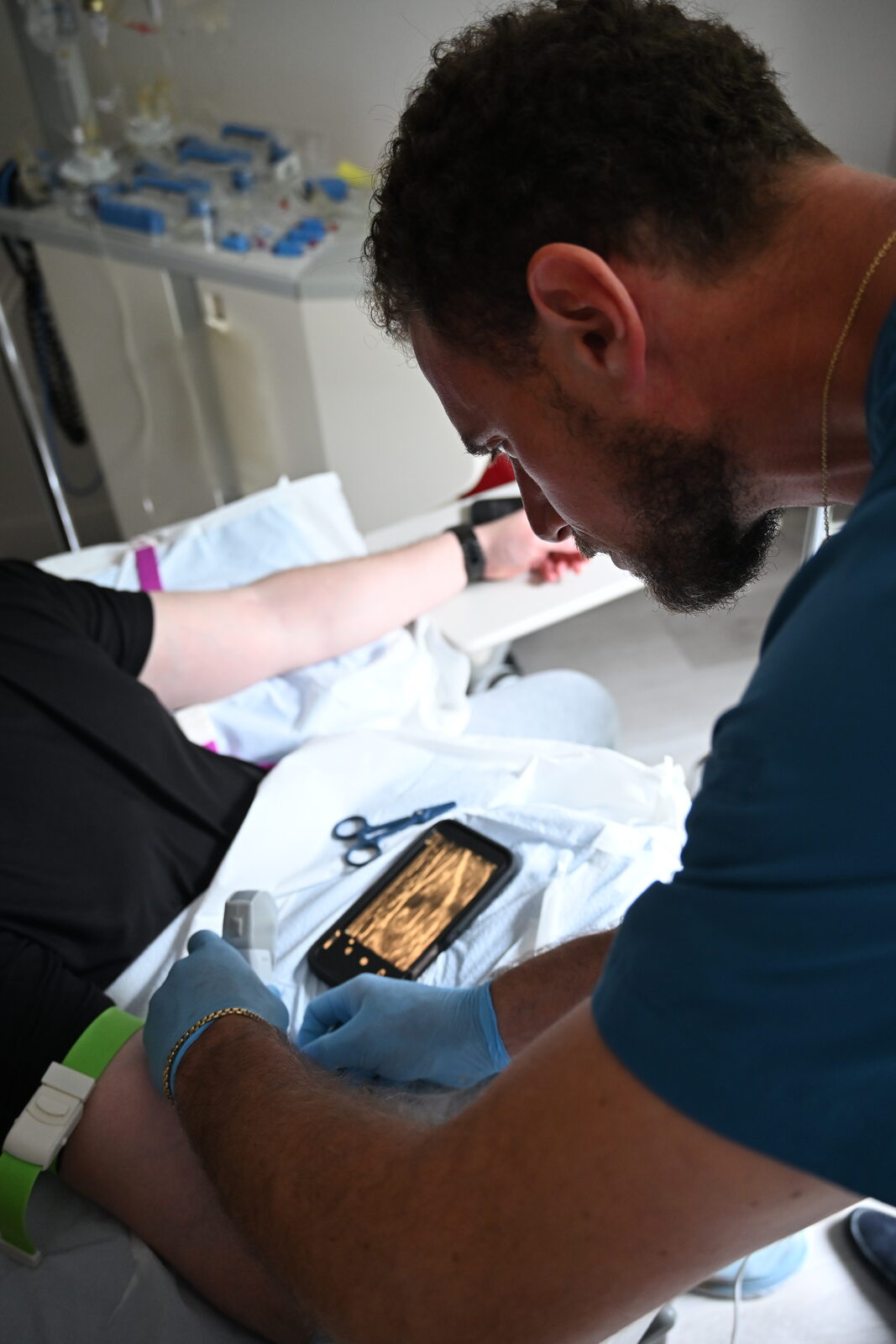
Ultrasound-Guided Access. Every Time.
Therapeutic plasma exchange requires reliable, high-flow venous access. At Purety Clinic, Dr. Birch personally performs ultrasound-guided cannulation for every TPE session — visualizing the vessel in real time before placement.
The result is a faster, more comfortable stick, fewer attempts, and dramatically less bruising or vessel trauma than blind sticks. It's the same standard of care used in hospital apheresis suites — delivered in a calm outpatient setting, by the physician treating you.
Important: Therapeutic plasma exchange is not covered by insurance in our outpatient setting. TPE at Purety Clinic is fee-for-service. We provide transparent pricing at consultation and a superbill you may submit for potential out-of-network reimbursement.
Why TPE for Lupus
Systemic lupus erythematosus (SLE) is a prototypical antibody-mediated autoimmune disease. The clinical picture — whether it presents as nephritis, neuropsychiatric symptoms, serositis, hematologic cytopenias, or skin and joint disease — is driven in significant part by circulating autoantibodies (anti-dsDNA, anti-Sm, anti-Ro, anti-La, antiphospholipid antibodies) and by the immune complexes they form.
Standard lupus management uses immunosuppression to slow the production of these antibodies — hydroxychloroquine, mycophenolate, azathioprine, methotrexate, belimumab, rituximab, and corticosteroids — but these treatments take weeks to months to lower antibody burden. In a severe flare, that lag is the problem.
TPE removes the circulating autoantibodies and immune complexes directly, in hours to days rather than weeks. The American Society for Apheresis (ASFA) recognizes plasma exchange as a Category I indication for severe lupus presentations including diffuse alveolar hemorrhage, severe neurolupus, and catastrophic antiphospholipid syndrome. At Purety Clinic, TPE is offered as an adjunctive option alongside conventional rheumatologic care — not a replacement for it.
What the Research Shows
ASFA guidelines (most recent edition: 2023) classify TPE for severe lupus indications including diffuse alveolar hemorrhage, neuropsychiatric SLE, and catastrophic antiphospholipid syndrome as Category I — meaning plasma exchange is accepted as first-line therapy, either as primary treatment or alongside other modalities. For lupus nephritis specifically, TPE is Category III — meaning the optimal role of plasma exchange is not established and decisions should be individualized.
Beyond ASFA's formal indications, multiple case series have documented use of TPE in refractory cutaneous lupus, severe serositis, and lupus-driven hematologic disease, particularly when conventional immunosuppression has failed or is contraindicated.
We do not present TPE as a replacement for hydroxychloroquine or for the immunosuppressive regimen prescribed by your rheumatologist. We do offer it as a meaningful adjunctive tool in the integrative management of antibody-mediated lupus disease, with full informed consent.
Who Is a Candidate for TPE for Lupus (SLE)?
- Established SLE diagnosis with positive antibody profile (ANA + at least one specific autoantibody)
- Active flare or refractory disease despite standard immunosuppression
- Coordination with your rheumatologist for shared care (we welcome and encourage this)
- No active untreated infection — a relative contraindication during apheresis
- Realistic expectations about TPE as adjunctive, not curative
Final candidacy is determined at consultation by Dr. Birch after review of your full clinical history, lab work, and treatment goals. TPE is not appropriate for every patient and we will tell you so directly when it is not the right tool.
What the Lupus (SLE) Protocol Looks Like
Outpatient TPE at Purety Clinic is intended for stable antibody-burdened lupus patients seeking to lower circulating autoantibody load alongside their existing rheumatologic care. A typical schedule is a 5-session induction course delivered weekly or every other week, followed by reassessment with your rheumatologist and (for responders) a monthly to every-other-month maintenance cadence calibrated to antibody trends and clinical response.
Acute lupus crises — including diffuse alveolar hemorrhage, severe neuropsychiatric SLE, catastrophic antiphospholipid syndrome, or rapidly progressive lupus nephritis — are medical emergencies that belong in a hospital setting under rheumatology, nephrology, and inpatient apheresis teams. We will refer patients in active crisis directly to emergency care; we do not provide outpatient TPE as a substitute for inpatient management of Category I emergency presentations.
Concurrent immunosuppressive medications prescribed by your rheumatologist are continued throughout the outpatient TPE course unless your rheumatologist directs otherwise. We coordinate the timing of rituximab, cyclophosphamide, or IVIG infusions around TPE sessions to avoid clearing those medications from circulation shortly after dosing.
Curious about the TPE procedure itself?
See our complete therapeutic plasma exchange overview, including how each session works, what the equipment looks like, and what to expect on the day of your visit.
Read the Full TPE OverviewComing from the LA area? See therapeutic plasma exchange for Los Angeles & South Bay patients.
Frequently Asked Questions: TPE for Lupus (SLE)
From the Blog
All Articles

Two Licensed Naturopathic Medical Doctors. One Practice.
The naturopathic medical doctors caring for our patients at Purety Family Medical Clinic.
Dr. Jonathan Birch, NMD, RMSK
Founder · Naturopathic Medical Doctor
Licensed Naturopathic Medical Doctor and Registered in Musculoskeletal Sonography. Practicing root-cause integrative medicine since 2014. Areas of focus include FMT and microbiome restoration, hormone and thyroid optimization, autoimmune and Long COVID protocols, ozone and IV nutrient therapy, and PRP and regenerative injections.
Read Dr. Birch's full bioDr. Dena Birch, NMD
Naturopathic Medical Doctor · Women's Health & Pediatrics
Licensed Naturopathic Medical Doctor leading our women's health and holistic pediatric care. Areas of focus include perimenopause and bioidentical hormone therapy, PCOS and thyroid, fertility support, pediatric eczema, immune issues and recurrent infections, and gentle well-child care for families.
Read Dr. Dena's full bioDiscuss TPE for Lupus (SLE) with Dr. Birch
Call (805) 500-8300 or submit a consultation request. Remote consultations available for patients outside Santa Barbara.
(805) 500-8300